To be a valuable global supplier
for metallic honeycombs and turbine parts


Contact number
0555-2813555
To be a valuable global supplier
for metallic honeycombs and turbine parts
Technological Innovation
Process Management
Continuous Improvement
Customer Satisfaction

Knowledge
Dedication
Diligence
Loyalty
Responsibility
Confidence
Tenacity
Respect

To be a valuable global supplier
for metallic honeycombs and turbine parts
Release time:2026-07-13
People ask us all the time. "How do you actually make that honeycomb stuff?" They see the finished product – the little hexagonal cells, the rigid structure – and they think it's complicated. It is. But it's also straightforward once you see the steps.
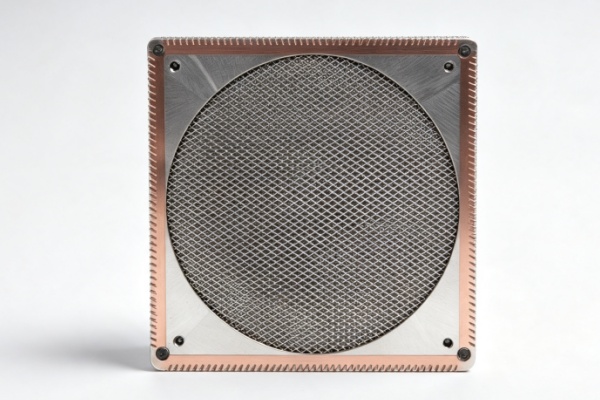
We run a full production line for metal honeycomb core. Corrugating, laminating, and vacuum brazing. Three main stages. Each one has to be right, or the whole thing falls apart.
Here's how we do it.
Why Honeycomb Isn't Just Stamped
Some people think you can stamp honeycomb out of a sheet of metal like a cookie cutter. You can't. The cells are too deep, the walls are too thin. Stamping would tear the metal.
So you build it layer by layer. Flat foil and corrugated foil stacked together. That's the core of the process. Every honeycomb panel starts with those two things – smooth sheets and corrugated sheets, laid alternately. The corrugated layer creates the cell walls. The flat layer closes them off.
Step One: Corrugating – Making the Waves
The first stage is corrugating. We take rolls of thin metal foil – aluminum, stainless, whatever the job calls for – and run them through a set of forming rolls. The rolls press the flat foil into a wavy shape. Corrugations. Like a miniature version of a cardboard box liner.
The roll geometry determines the cell size. Tighter corrugations = smaller cells. Wider spacing = bigger cells. We have different roll sets for different cell sizes – 1/8 inch, 1/4 inch, 1/16 inch.
The foil has to be consistent. If the thickness varies, the corrugations come out uneven. Uneven corrugations mean uneven cells. Uneven cells mean bad airflow and weak structure. So we check every coil before it goes through the rolls.
Some production methods use progressive corrugation – the foil gets corrugated gradually as it moves through the machine. Others use a single pass. We use a multi-stage process with fine-tuning molds to get the shape exactly right.
Step Two: Laminating – Stacking the Layers
Once the foil is corrugated, we stack it. Corrugated layer, flat layer, corrugated layer, flat layer. Over and over.
For round honeycomb – like catalytic converter substrates – we wind the layers around a mandrel. Like rolling up a sleeping bag. For flat panels – like EMI shielding vents – we stack them in a fixture. Layer by layer, cut to size.
The stacking has to be precise. If the layers shift, the cells get crooked. Crooked cells = bad flow distribution = hot spots and poor shielding.
We use stacking fixtures with guide pins. The fixture holds the layers square while we build the stack. Then the whole fixture goes into the brazing furnace.
Between the layers, we apply brazing material. For some processes, it's a paste. For others, it's a thin foil or powder. The brazing material is what will melt and bond the layers together in the furnace.
Step Three: Vacuum Brazing – Making It One Piece
This is where the magic happens.
The stacked honeycomb goes into a vacuum furnace. We pull a vacuum – down to 10⁻⁵ torr or better. No oxygen. Oxygen would oxidize the metal and ruin the braze.
Then we heat it up. Ramp slowly – 10°C per minute or less. If you heat too fast, the metal expands unevenly and warps.
At brazing temperature, the filler material melts. For stainless, that's around 1040°C. For aluminum, around 600°C. The molten filler flows into the gaps between layers by capillary action. It wets the surfaces and forms a metallurgical bond.
Then we hold it at temperature – soak – to let the filler flow everywhere. Small parts soak for 10 minutes. Big stacks soak for 30 minutes or more.
Then we cool it down. Slow. 5°C per minute until about 500°C. Too fast and the metal shrinks unevenly. Cracks form.
The whole cycle takes 6-8 hours. You can't rush it. We tried a fast cycle once. Scrapped the batch.
In some cases, we use a protective gas atmosphere instead of vacuum. But for the best quality – no oxidation, strongest bonds – vacuum is the way to go.
Why Brazing Beats Gluing
You can glue honeycomb together. Some manufacturers do. It's cheaper. But it doesn't last.
Glue degrades under heat. It gets brittle in the cold. It absorbs moisture. Over time, the bond weakens. The shielding drops.
Brazing is permanent. The metal itself fuses together. No glue to fail. No moisture to absorb. No thermal cycling to fatigue.
In EMI shielding applications, brazed honeycomb gives 90‑110 dB of attenuation. Bonded gives 60‑85 dB at best. That's a big gap. That's the difference between passing EMC and failing.
Brazing also handles the heat. A glued honeycomb panel can delaminate in a hot exhaust. Brazed holds together at 800°C.
What Can Go Wrong
Even with the right equipment, things can go sideways.
Foil quality. If the foil has oil or oxidation, the braze won't stick. We check every coil.
Corrugation consistency. Worn rolls make uneven cells. We change rolls on a schedule, not when they break.
Stacking alignment. Shifted layers = crooked cells. Fixtures keep them straight.
Furnace temperature. Too cold, the filler doesn't flow. Too hot, the metal warps. We monitor with thermocouples inside the furnace, not just on the controller.
Cooling rate. Too fast, cracks. We cool slow.
Vacuum level. If the vacuum isn't deep enough, oxidation ruins the braze. We monitor throughout the cycle.
What We Check After Brazing
Peel test. Sacrifice one part from every batch. Peel the layers apart. The foil should tear before the braze lets go. If the braze separates clean, the whole batch is suspect.
Tap test. Tap the honeycomb with a screwdriver. A solid braze rings. A bad one thuds.
Light test. Shine a light through. Even pattern = good. Dark spots = crooked or crushed cells.
Dimensions. Measure it. Out of spec? Doesn't ship.
Bottom Line
Honeycomb core production isn't complicated. Corrugate the foil. Stack it. Braze it. But every step has to be right.
Good foil. Sharp rolls. Precise stacking. Controlled furnace cycle. Slow cooling. Thorough testing.
That's how you get honeycomb that stays honeycomb – not a pile of loose foil.
We run this line every day. We've made the mistakes. We've fixed them. Now we know what works.
If you need honeycomb core that holds together, that's what we do.