To be a valuable global supplier
for metallic honeycombs and turbine parts


Contact number
0555-2813555
To be a valuable global supplier
for metallic honeycombs and turbine parts
Technological Innovation
Process Management
Continuous Improvement
Customer Satisfaction

Knowledge
Dedication
Diligence
Loyalty
Responsibility
Confidence
Tenacity
Respect

To be a valuable global supplier
for metallic honeycombs and turbine parts
Release time:2026-07-10
We get calls from guys who bought cheap honeycomb vents a few years ago. Worked fine at first. Now the shielding is shot. Equipment is glitching. They can't figure out why.
The vent looks fine. No visible damage. But put a spectrum analyzer near it, and RF is pouring through.
What happened? The honeycomb didn't fail. The bond did.
There are two ways to make honeycomb vents – vacuum brazed and bonded (glued). They might look the same when they're new. Five years later, they're not even close.
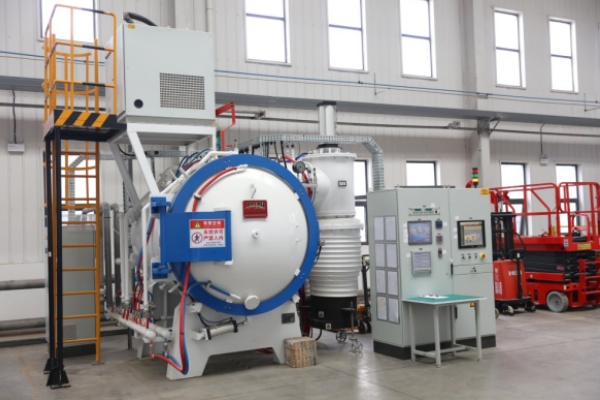
Vacuum brazed honeycomb – The foil layers are fused together in a high‑temperature furnace. The metal itself melts and reforms into continuous joints. No glue. No adhesive. Just solid metal connections all the way through.
Bonded honeycomb – The layers are held together with adhesive. Epoxy, conductive glue, whatever is cheap. The joints are glued, not metallurgically bonded.
One is a solid piece of metal. The other is metal held together with glue.
Honeycomb vents shield because the metal cells create a continuous conductive path. RF hits the cells, bounces around, dies.
A brazed joint is metal to metal. Conductivity is the same across the entire structure. No breaks. No gaps.
A glued joint is different. The adhesive itself doesn't conduct. The patent on bonded honeycomb admits it: glued joints do not conduct electricity in a direction perpendicular to the strip of foil and can result in electromagnetic leakage.
In plain English: glued honeycomb only conducts along the foil, not across the joints. RF can sneak through the gaps where the glue sits.
Brazed honeycomb conducts in every direction. That's the difference between 60 dB and 95 dB at 3‑6 GHz.
This is where the gap widens.
A bonded vent works fine when it's new. The glue holds. The joints are tight. Then time passes.
Temperature cycling – Heat expands the metal. Cold shrinks it. Glue doesn't expand and contract at the same rate as metal. Over hundreds of cycles, the bond fatigues. Micro‑gaps open up. RF leaks.
Vibration – Same story. Glue gets brittle. It cracks. The joints loosen.
Moisture – Glue can absorb moisture. It swells. It weakens. In humid environments, bonded vents degrade faster.
Brazed joints don't have this problem. The metal is fused. There's no glue to fatigue, crack, or absorb water. High‑temperature vacuum brazing ensures the honeycomb stays solid and the shielding stays consistent over years of thermal cycling.
We've seen the comparison data. A vacuum brazed panel from a quality supplier gives about 90‑110 dB at 3‑6 GHz. An epoxy‑bonded panel from the same size and cell density? About 60‑85 dB.
That's a 30‑50 dB gap. At those frequencies, that's the difference between passing EMC and failing.
One field example: a bonded aluminum vent in an outdoor 5G RRU cabinet was replaced with a vacuum brazed multi‑stack aluminum panel with nickel plating. The result: +18‑25 dB shielding improvement at 2‑6 GHz. Same cabinet, same frequency, just a better vent.
Bonded honeycomb is cheaper to make. That's why it exists. You can glue aluminum strips together in a simpler process. But the glue is insulating and provides sufficient conductivity in only one direction.
Vacuum brazing requires high‑temperature furnaces, tight process control, and real expertise. It's more expensive. It's slower. And only a handful of factories actually do it at scale.
The market is moving from glued assemblies to brazed and laser‑welded panels because the consistency matters.
Materials – Bonded vents often use aluminum because it's light and cheap. But aluminum is significantly less durable than steel, stainless, or brass. Brazed vents can use 304, 316L, brass, or even Hastelloy.
Plating – Bonded vents sometimes skip plating to save cost. Bare aluminum corrodes. Brazed vents are often nickel or tin plated for long‑term corrosion resistance.
Service life – A quality vacuum brazed honeycomb vent is rated for 10‑15 years in indoor environments. Bonded? It depends on the glue and the environment, but the thermal drift risk is real.
Bonded honeycomb is cheaper. It works when it's new. If your application is low‑stress, low‑temperature, and short‑term, it might be fine.
But if you need shielding that stays consistent for years – through temperature cycles, vibration, and humidity – vacuum brazed is the only answer.
The glue doesn't hold up. The joints don't conduct across all directions. The shielding drifts.
Brazed honeycomb holds 90‑110 dB year after year. Bonded gives you 60‑85 dB at best, and it doesn't stay there.
We make vacuum brazed honeycomb vents. If you need shielding that stays shielding, that's what you get. That's what we do.