To be a valuable global supplier
for metallic honeycombs and turbine parts


Contact number
0555-2813555

To be a valuable global supplier
for metallic honeycombs and turbine parts

Technological Innovation
Process Management
Continuous Improvement
Customer Satisfaction

Knowledge
Dedication
Diligence
Loyalty
Responsibility
Confidence
Tenacity
Respect

To be a valuable global supplier
for metallic honeycombs and turbine parts
Release time:2026-07-08
We get calls from guys who already bought a vent board. It looked right. Fit the opening. Price was good. But it didn't pass EMC. Or it choked the fans. Or the gasket rotted in six months.
They didn't check the full parameter list. They just looked at the price and the size.
Here's the complete checklist. What to check before you buy an EMC vent board. No fluff. Just what matters.
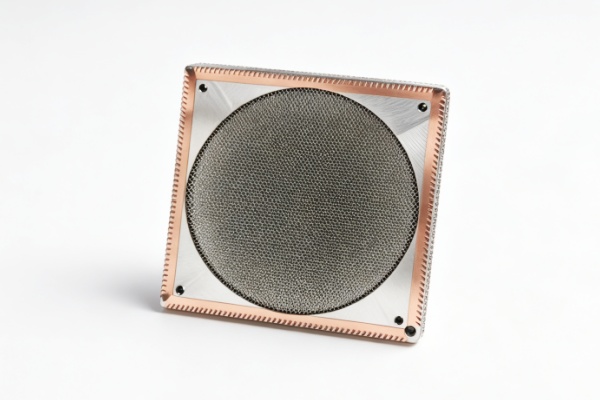
1. Shielding Effectiveness – At Your Frequency, Not Just One Number
This is the one everybody looks at. But most people look at the wrong number.
A datasheet might say "60 dB at 1 GHz." That's fine. But what about at your frequency? If your problem is at 5 GHz, and the vent drops to 30 dB there, you got a problem.
Ask for shielding data across the frequency range you care about. Not just one point.
Also, check the test method. Far‑field (IEEE 299, MIL‑STD‑285) is the real deal. Near‑field probe tests are cheaper and faster, but they give optimistic numbers that don't hold up in the real world.
If they can't tell you how they tested it, be suspicious.
2. Cell Size – Match to Your Frequency
The cell size determines what frequencies the vent blocks.
1/4‑inch (6.35 mm) – cutoff around 600 MHz. Good for low frequencies. Open area around 90%. Best airflow.
1/8‑inch (3.18 mm) – cutoff around 1‑2 GHz. The workhorse. 85% open area. Good for most telecom, 4G, Wi‑Fi.
1/16‑inch (1.6 mm) – cutoff around 3 GHz. For 5G, radar, millimeter wave. Open area drops to 75‑80%. Airflow takes a hit.
The rule: use the biggest cell that still covers your frequency. Don't overspec. A 1/16‑inch vent at 2.4 GHz shields great, but it chokes airflow for no reason.
3. Cell Depth – The Underrated Knob
Depth is how thick the honeycomb is. Standard is 1/2 inch (12.7 mm). You can go 1 inch or more.
Deeper cells shield better. A 1/8‑inch cell vent at 5 GHz might give 35 dB at 1/2‑inch depth, and 55 dB at 1‑inch depth.
But depth kills airflow. Pressure drop roughly doubles when you double the depth.
Rule of thumb: the cell depth should be at least 3 to 4 times the cell diameter. So a 3.18 mm cell needs at least 12.7 mm depth. That's the waveguide‑below‑cutoff effect.
For most applications, 1/2 inch is enough. Go deeper only if you need the extra shielding and have fan budget.
4. Open Area – Airflow Matters
Open area is the percentage of the vent face that's empty space. Higher is better for airflow.
A good honeycomb vent has 80‑90% open area. Some high‑end designs hit 95%. Perforated sheet has 30‑50%. Wire mesh has 50‑60%.
Less than 80%, fans struggle. Pressure drop goes up. Equipment runs hotter.
Ask for the open area percentage. If they don't know, they're guessing.
5. Pressure Drop – How Hard Fans Work
Pressure drop is the resistance to airflow. Measured in inches of water or pascals.
At 200 CFM through a 12x12 panel, a good honeycomb vent has pressure drop of about 0.1 to 0.2 inches of water. Fans won't even notice. At 500 CFM, around 0.4 to 0.6 inches. At 1,000 CFM, it might hit 1.5 inches – that's where you hear the fans working.
Get a pressure drop curve from the supplier. If they can't give you one, be careful.
6. Material – Aluminum vs. Steel vs. Brass
Material affects shielding, corrosion resistance, and weight.
Aluminum – light, cheap, good conductivity. Fine for indoor. Corrodes in salt air.
Steel – better low‑frequency magnetic shielding. Heavier. More durable.
Brass – non‑ferrous, good for high humidity and non‑magnetic requirements.
For outdoor or coastal, use stainless steel or nickel‑plated aluminum. Bare aluminum will corrode.
7. Surface Finish – Corrosion Protection
Aluminum needs a conductive finish. Nickel plating is common. Chromate conversion (Alodine) also works.
Bare aluminum oxidizes. The oxide layer is non‑conductive. Shielding drops.
Ask: what's the surface finish? If it's bare aluminum, keep it indoors.
8. Frame Material and Construction
The frame holds the honeycomb. It needs to be flat and stiff.
Aluminum frame – light, common. 5052 or 6063 alloy.
Steel frame – stronger, better for high vibration.
Frame thickness – at least 2‑3 mm. Thin frames warp.
Brazed vs. bonded – brazed construction (vacuum brazed or laser welded) holds up under temperature cycling. Bonded (glued) honeycomb can delaminate over time. Ask which one they use.
9. Gasket – Conductive and Sealed
The gasket seals the frame to the cabinet. No gasket, no seal.
Silver‑filled silicone – good for most. Soft, conforms.
Beryllium copper fingers – durable, high contact force. Good for high vibration and frequent access.
Knitted wire mesh – tough, stands up to harsh conditions.
Closed‑cell silicone – for weather sealing outdoors.
Never use foam. Foam doesn't conduct. It absorbs water and rots.
10. Mounting – Screws, Spacing, Torque
The vent has to mount properly. Details matter.
Screw spacing – no more than 4 inches (100 mm) apart. Closer is better. Too far apart, the gasket lifts in the middle.
Screw torque – too loose, gaps. Too tight, frame warps. Get the torque spec.
Mounting surface – must be bare metal. No paint. No anodize. Paint is an insulator.
Screw material – stainless for outdoor. Plated steel rusts.
11. Dimensions and Tolerances
The vent has to fit your opening. Not almost. Exactly.
Overall size – length, width, thickness.
Cutout size – the hole it mounts into.
Hole pattern – screw locations.
Ask for a drawing with tolerances. If the vent is off by even 0.5 mm, it won't seal.
12. Environmental Ratings – IP and NEMA
For outdoor or harsh environments, you need ratings.
IP54 – dust‑protected, splashing water. Common for outdoor telecom.
IP65 – dust‑tight, low‑pressure water jets.
IP66 – dust‑tight, high‑pressure water jets.
NEMA 3/3R – outdoor, rain, sleet, snow, windblown dust.
NEMA 4 – water and dust protection.
If the vent is going outside, ask for the IP rating of the complete assembly – vent plus gasket and frame. Bare honeycomb has no IP rating.
13. Test Standards – How Was It Verified?
Anyone can claim numbers. Ask for test reports.
IEEE 299 – standard for shielding effectiveness of enclosures and materials.
MIL‑STD‑285 – military standard for shielding enclosures.
MIL‑STD‑810 – environmental testing.
ASTM D4935 – for planar materials.
If they can't provide test reports, they're not serious.
14. Compliance – Industry Standards
For specific applications, you might need compliance.
NEBS – telecom equipment.
Bellcore GR‑63‑CORE – environmental for telecom.
UL – fire safety.
Ask: is this vent compliant with my industry standards?
15. Traceability and Batch Records
If a vent fails in the field, you need to know which batch it came from.
Ask for batch numbers. Test reports. Material certificates.
If they can't provide traceability, they're not a real supplier.
The Checklist – What to Ask Before You Order
What's the shielding effectiveness at my frequency?
How was it tested? Far‑field or near‑field?
What's the cell size?
What's the depth?
What's the open area?
What's the pressure drop at my airflow?
What material? Aluminum? Steel? Brass?
What's the surface finish?
What's the frame material and thickness?
Brazed or bonded construction?
What gasket material?
Screw spacing and torque spec?
Dimensions and tolerances?
IP or NEMA rating?
What test standards? Can I see the reports?
Any industry compliance? NEBS? UL?
Batch traceability?
Bottom Line
Buying an EMC vent board isn't complicated. But you have to check more than the price and the size.
Shielding at your frequency. Cell size. Depth. Open area. Pressure drop. Material. Finish. Gasket. Mounting. Dimensions. IP rating. Test standards. Traceability.
We make EMC vent boards. We test them. We keep records. If you're not sure what to ask, send us your requirements. We'll spec the right vent.