To be a valuable global supplier
for metallic honeycombs and turbine parts


Contact number
0555-2813555
To be a valuable global supplier
for metallic honeycombs and turbine parts

Technological Innovation
Process Management
Continuous Improvement
Customer Satisfaction

Knowledge
Dedication
Diligence
Loyalty
Responsibility
Confidence
Tenacity
Respect

To be a valuable global supplier
for metallic honeycombs and turbine parts
Release time:2026-07-07
Most people think an EMC ventilation board only handles one thing – radiated interference. The noise that flies through the air from your cabinet. And yeah, that's the main job.
But conducted emissions? The noise that travels back through power lines and signal cables? That's different. A honeycomb vent doesn't stop conducted noise directly. But it's still part of the solution.
Here's how an EMC ventilation board fits into the bigger picture – and where it needs help from filters and grounding.
EMI comes in two flavors.
Radiated emissions – noise that travels through the air. Above 30 MHz. Your cabinet acts like an antenna. The ventilation opening is the biggest hole in that antenna.
Conducted emissions – noise that travels through wires. Power lines, signal cables, ground loops. Below 30 MHz. It doesn't fly through the air – it rides on the copper.
Two different problems. Two different solutions.
How an EMC Vent Stops Radiated EMI
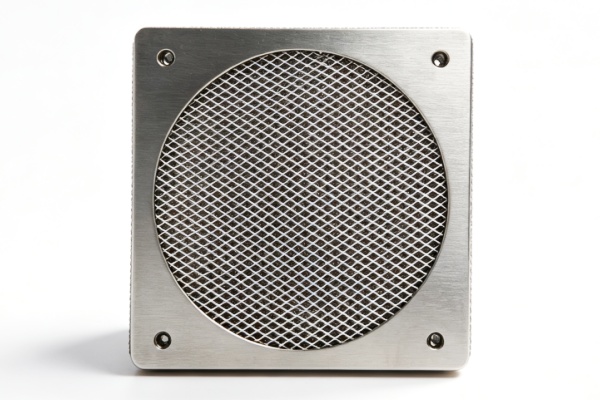
Radiated noise tries to escape through the ventilation opening. That's where the honeycomb vent does its job.
The honeycomb is a bunch of little metal tubes. Each tube is a waveguide. If the tube is small enough, the RF signal can't propagate through it. It bounces off the walls and dies.
That's called waveguide below cutoff. The rule of thumb: the cell depth needs to be at least 3 to 4 times the cell diameter. A standard 3.2 mm cell with 12.7 mm depth gives you 53-105 dB of shielding from 200 kHz all the way up to 10 GHz.
So the vent blocks radiated noise from escaping. And it blocks outside signals from getting in. That's the primary job.
Where Conducted EMI Comes From
Conducted noise doesn't care about the vent. It travels along the power cord, the ground wire, the signal cables. The vent can't stop that.
If your power cable is radiating, or your ground loop is carrying noise, the vent does nothing. You'll still fail conducted emissions tests.
Common conducted noise sources:
Switching power supplies
Motor drives
Poor grounding
Long cable runs
You can have the best honeycomb vent in the world, but if your power cables are acting like antennas, you'll still have conducted emissions problems.
How the Vent Helps with Conducted (Indirectly)
A honeycomb vent doesn't stop conducted noise. But it helps in two indirect ways.
First, it reduces the need for radiated emissions to turn into conducted. If noise can't radiate from the cabinet, it's less likely to couple onto cables inside the cabinet. Less radiation = less conducted noise picked up by internal wiring.
Second, it completes the shield. A properly grounded vent panel maintains the electrical continuity of the enclosure. That continuity is part of the return path for conducted noise. If the shield isn't continuous, conducted noise finds other paths.
In practice, conducted emissions are handled by power line filters, ferrite beads, and proper grounding. The EMC vent supports that effort by keeping the enclosure shielded.
What It Can't Do
A honeycomb vent won't fix a noisy power supply. It won't fix a bad ground. It won't fix radiating cables.
If your equipment is failing conducted emissions tests, the vent isn't the answer. You need:
EMI filters on power inputs
Proper cable shielding and routing
Grounding that actually works
The vent keeps the RF inside the box. The filters keep it off the wires.
Real Example – Server Cabinet
A customer had a server cabinet with good honeycomb vents. Radiated emissions passed. Conducted emissions failed. The noise was coming from the power supply and riding out on the power cord.
We added EMI filters on the power inputs. The filters knocked down the conducted noise. The vents kept the radiated noise contained. Both passed.
Real Example – Telecom Enclosure
Another customer had both problems. Radiated noise was leaking through the ventilation. Conducted noise was riding on the ground loop. They were failing both tests.
We installed honeycomb vents for the radiated emissions. We added a ground strap and power line filters for the conducted emissions. Both problems solved.
Bottom Line
An EMC ventilation board stops radiated EMI by using waveguide below cutoff to block RF from passing through the ventilation opening.
It doesn't directly stop conducted EMI. Conducted noise travels through power and signal lines, not through the air.
To pass both tests:
Use a honeycomb vent for radiated emissions
Use filters and proper grounding for conducted emissions
Keep the enclosure shield continuous
We make the vents. We know what they do and what they don't. If you have a conducted emissions problem, we'll tell you it's not the vent. That's what we do.