To be a valuable global supplier
for metallic honeycombs and turbine parts


Contact number
0555-2813555

To be a valuable global supplier
for metallic honeycombs and turbine parts

Technological Innovation
Process Management
Continuous Improvement
Customer Satisfaction

Knowledge
Dedication
Diligence
Loyalty
Responsibility
Confidence
Tenacity
Respect

To be a valuable global supplier
for metallic honeycombs and turbine parts
Release time:2026-06-23
We get calls from guys who bought a cheap shield vent online. It said "EMI shielding." They put it on an outdoor cabinet. Six months later, it's rusted, the gasket is rotted, and the equipment is glitching.
They ask: "What happened?"
Happened? You put an indoor vent outside. That's what happened.
Here's why you can't use indoor grade shield vents on outdoor projects – and what you should use instead.
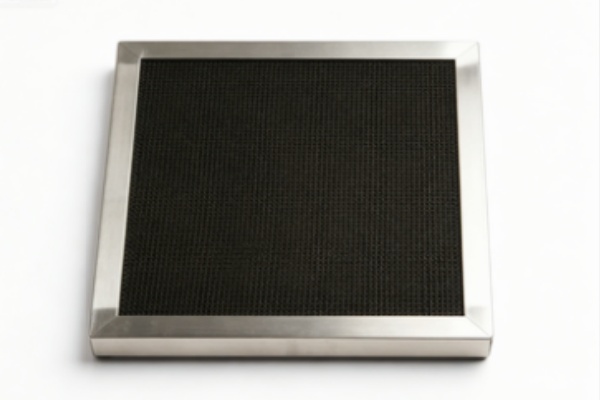
The Obvious Stuff – Water
Indoor vents don't seal against rain. The frame is flat. The gasket is a simple foam strip. Water runs down the cabinet face, hits the gap between the vent and the cabinet, and seeps in.
Outdoor vents have rain lips. A raised edge that directs water away from the seal. Or a louver cover in front of the honeycomb.
Also, indoor vents don't have drain holes. If water does get in, it stays in the honeycomb. Freezes in winter, expands, cracks the cells. Or just sits there and corrodes the aluminum.
We've seen indoor vents on outdoor cabinets that had standing water in the bottom cells. The customer wondered why the shielding dropped.
Corrosion – The Slow Killer
Indoor vents are aluminum. Aluminum is fine indoors. Put it outside, especially near the coast, and it starts corroding. White powder. Pitting. The surface becomes non‑conductive. Shielding drops 20, 30, 40 dB.
Outdoor vents are stainless steel. 304 for most. 316L for coastal. They don't corrode. They cost more. They last.
Also, the screws and hardware. Indoor vents use plated steel screws. They rust outside. The rust creeps into the frame, lifts the gasket, and you get leaks.
Outdoor vents use stainless hardware. No rust.
UV Damage – Gaskets Die
The sun kills gaskets. UV radiation breaks down rubber. Foam gaskets turn to dust in a year. Silver‑filled silicone lasts a bit longer, but still degrades.
Outdoor vents use UV‑resistant gaskets. Or they use beryllium copper fingers – no rubber to degrade.
We've seen indoor vents on a rooftop in Arizona. Six months later, the gasket was brittle and cracked. The vent was leaking RF. The customer thought the honeycomb was bad. It was just a dead gasket.
Temperature Extremes – Expansion and Contraction
Indoor vents are designed for a stable temperature – maybe 10°C to 40°C. Outdoor vents see -40°C to +70°C.
That thermal cycling is hard on materials. Aluminum expands more than stainless. The frame and honeycomb can warp. Gaskets take a set. Screws work loose.
We tested an indoor vent in a thermal chamber. 100 cycles from -20°C to +60°C. The frame bowed 0.5 mm. The gasket lost compression. Shielding dropped 20 dB.
The outdoor version with stainless frame and silicone gasket? Survived 500 cycles with no measurable change.
Dust and Sand – Abrasion
Indoor vents sit in clean, climate‑controlled rooms. Dust is minimal.
Outdoor vents on a tower or in a desert see sand, dust, and dirt. Abrasive particles sandblast the honeycomb. The cells get damaged. The shielding degrades.
Also, dust can clog the cells. Airflow drops. Equipment overheats.
Outdoor vents are built with thicker foil to resist abrasion. Indoor vents use thin foil that gets worn away.
Insect and Animal Ingress
Indoor vents don't need insect screens. Outdoor vents do.
Bugs, spiders, small rodents – they find their way into the honeycomb. They build nests. They block cells. They eat gaskets.
We've seen wasp nests in honeycomb vents on cell towers. The cells were completely blocked. No airflow. The equipment overheated.
Outdoor vents have insect screens or tighter cell sizes to keep critters out. Indoor vents don't.
Lightning and Surge Protection
Outdoor cabinets on towers need lightning protection. The vent is part of the cabinet's ground path. It has to handle surge currents.
Indoor vents have thin aluminum frames that would melt under a lightning strike. The gasket would vaporize. The shield would fail.
Outdoor vents use beefy stainless steel frames. They're designed to carry lightning current to ground.
Real Example – The Rooftop Vent
A guy installed an indoor vent on a rooftop telecom cabinet. It was on a building in Florida. Same cabinet size, same frequency. The indoor vent looked like it fit.
Six months later, the equipment was glitching. We measured the vent. At 2 GHz, shielding was 15 dB – originally 50 dB.
We opened the cabinet. The vent had white powder on the aluminum. The gasket was cracked. There was water in the bottom cells.
We replaced it with a stainless 316L vent with a rain lip and silicone gasket. Shielding came back. No more water.
Real Example – The Desert Tower
Another customer put an indoor vent on a tower in Arizona. The gasket dried out and cracked in 8 months. The honeycomb was clogged with dust. Airflow dropped 40%.
We swapped to a stainless vent with a louver cover and insect screen. Also used a thicker mat and larger cells to resist dust plugging.
That vent is still working after three years.
What You Need for Outdoor
If you're putting a vent outside, you need:
Stainless steel frame and honeycomb (316L for coastal)
Conductive gasket – silicone or beryllium copper
Rain lip or louver cover
Drain holes at the bottom
UV‑resistant materials
Insect screen or small cell size
Thick enough frame to handle thermal cycling
Stainless hardware
Yes, it costs more. But you buy it once.
Indoor vents are cheaper. But you'll replace them every year. And you'll have equipment failures in between.
Indoor grade shield vents are for dry, climate‑controlled environments. They're made of aluminum, use foam gaskets, and don't handle water or UV.
Outdoor projects need weatherproof EMI vents. Stainless, UV‑resistant gaskets, rain lips, drain holes.
Don't try to save money by putting an indoor vent outside. You'll pay for it in failures, downtime, and replacement parts.
We make both. We'll tell you which one you need. If you're going outside, we'll build the right vent. That's what we do.