To be a valuable global supplier
for metallic honeycombs and turbine parts


Contact number
0555-2813555
To be a valuable global supplier
for metallic honeycombs and turbine parts
Technological Innovation
Process Management
Continuous Improvement
Customer Satisfaction

Knowledge
Dedication
Diligence
Loyalty
Responsibility
Confidence
Tenacity
Respect

To be a valuable global supplier
for metallic honeycombs and turbine parts
Release time:2026-06-08
Look, we sell a lot of standard vents. 12x12 inches, 1/8‑inch cells, 1/2‑inch deep. They work for most people.
But then there's the other guy. His cabinet has a 10x14 inch cutout. Or a triangle. Or he needs to block a radar at 3 GHz with only 1/4 inch of space.
That's when you call us.
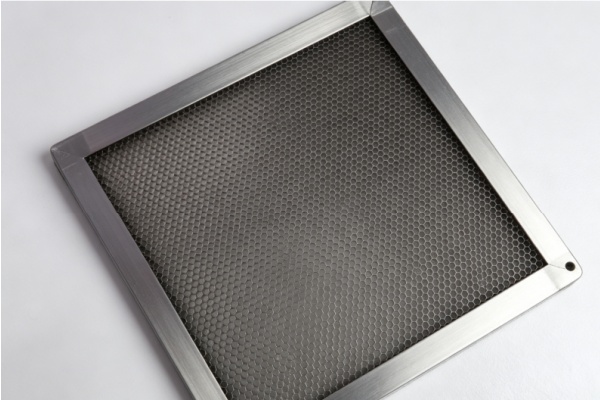
We make custom plane wave shielding ventilation boards for non‑standard applications. Here's how it works and what you need to tell us.
Why Standard Vents Don't Fit Everybody
Most cabinets are designed by people who never think about vents until the end. "Oh crap, we need cooling. Cut a hole." That hole is never a nice round 12 inches. It's whatever space was leftover.
So you end up with a 10x14 inch rectangle. Or a 6x24 inch slot. Or a D‑shape because a support bracket is in the way.
Standard vents won't fit. You can't jam a 12x12 into a 10x14. You either leave gaps (leaks) or you cut the cabinet (ugly).
So you need a custom size.
What "Custom" Means for Plane Wave Shielding
It's not just size. Sometimes it's performance.
A standard 1/8‑inch cell, 1/2‑inch deep vent gives about 35 dB at 5 GHz. But what if you need 60 dB at 5 GHz? That's non‑standard. You need 1/16‑inch cells or 1‑inch depth.
Or what if you have only 1/4 inch of space? Standard vents won't fit. You need a ultra‑thin design – which means different cell size, different material, maybe a different approach.
Or what if the vent has to fit around a pipe? You need a cutout in the vent itself. A hole in the honeycomb. That's a pain to make, but we've done it.
So "custom" can mean shape, size, cell size, depth, material, or any combination.
What We Need From You
To make a custom plane wave shielding board, we need a few things.
A drawing. CAD is best. PDF is okay. A napkin with dimensions? We'll work with it, but it'll take longer.
The frequency. What do you need to block? Highest frequency matters most.
The space. How deep can the vent be? 1/2 inch? 1 inch? Only 1/4 inch? Tell us.
The airflow. How many CFM? What's your fan static pressure? We need to size it so you don't choke.
The environment. Indoor? Outdoor? Coastal? Chemical? Salt spray changes material.
The mounting. Bolt holes? Flange? Gasket type?
Without this, we're guessing. Guessing leads to wrong parts. Wrong parts lead to angry phone calls. We hate those.
How We Make Custom Sizes
For standard vents, we have tooling. For custom, we build new tooling.
Cutting. We can cut a standard honeycomb block to any rectangle size on our CNC saw. That's easy. Square or rectangular.
Shaped. For trapezoids, triangles, D‑shapes, we need a custom stacking fixture. That takes time – 2‑3 weeks – and costs a few hundred dollars. Once the fixture is made, repeat orders are fast.
Holes in the honeycomb. Need a cutout for a pipe or a connector? We can CNC machine a hole through the honeycomb. But we have to seal the edges of the hole afterward. That's extra labor.
We once made a vent with a 2‑inch hole in the middle for a cable pass‑through. The customer was thrilled. We charged them for the time. They paid.
How We Make Custom Cell Sizes
Standard is 1/8 inch. Smaller? 1/16 inch. Larger? 1/4 inch. We have tooling for all three.
But if you need something in between – like 3/32 inch – we don't have that. That's a special order. New forming rolls. Expensive. Only worth it if you need thousands.
So stick with standard cell sizes unless you have a really weird frequency.
How We Make Custom Depths
Standard depth is 1/2 inch. We also have tooling for 1/4 inch and 1 inch.
Need 3/4 inch? We can do that by stacking two 3/8‑inch cores. Not ideal, but it works.
Need 2 inches? We stack two 1‑inch cores. It's fine.
But if you need a non‑standard depth often, we can order custom foil. Lead time is longer.
Real Example – Trapezoidal Vent
A customer had a cabinet with a trapezoidal opening – wider at the top than the bottom. They sent us a cardboard template. We built a stacking fixture to match. First batch took 6 weeks. They ordered 200. Repeat orders took 2 weeks.
The vent worked fine. Shielding met spec. Airflow was good.
Real Example – Ultra‑Thin for Tight Space
A medical device had only 6 mm of clearance. They needed to block 2.4 GHz Wi‑Fi. Standard 1/2‑inch vent wouldn't fit.
We made a 1/4‑inch deep vent with 1/16‑inch cells. Shielding at 2.4 GHz was 35 dB – enough for them. Airflow was lower, but they had fan margin.
They paid more for the custom design. Worth it to fit in the space.
Real Example – Cutout for Pipe
An industrial cabinet had a pipe running through the vent area. They needed a 2‑inch hole in the middle of the honeycomb.
We CNC cut the hole, then sealed the exposed cells with epoxy. The customer installed the pipe through the hole. No bypass, no leak.
It was a pain. We charged extra. They were happy.
What It Costs
Custom costs more. How much more? Depends.
Rectangular cut from standard stock – small upcharge.
Shaped (trapezoid, triangle) – tooling fee ($200‑500) plus per‑part increase.
Non‑standard cell size – large tooling fee, not worth for small quantities.
Non‑standard depth – small upcharge if we have foil in that thickness.
Holes in honeycomb – labor charge.
We're honest about pricing. No hidden fees. If it's expensive, we tell you upfront.
Lead Times
Standard sizes ship in a week.
Custom rectangular – 2 weeks.
Custom shape (needs new fixture) – 4‑6 weeks for first batch. Then 2 weeks for repeats.
Holes or other features – add 1 week.
If you're in a rush, we can sometimes expedite. Rush fee applies. Ask.
Custom plane wave shielding ventilation boards are for when standard won't fit.
We do custom sizes, shapes, cell sizes, depths, and cutouts.
Send us a drawing. Tell us your frequency, space, airflow, environment. We'll quote you a price and lead time.
We've made trapezoids, ultra‑thin boards, vents with holes, and one L‑shaped nightmare (never again). We can probably make yours.
Not sure if you need custom? Send us your cutout dimensions. We'll tell you if a standard vent can be modified. Sometimes you can just add a filler plate and save money.
But if you need real custom, we're your shop. That's what we do.