To be a valuable global supplier
for metallic honeycombs and turbine parts


Contact number
0555-2813555
To be a valuable global supplier
for metallic honeycombs and turbine parts
Technological Innovation
Process Management
Continuous Improvement
Customer Satisfaction
Knowledge
Dedication
Diligence
Loyalty
Responsibility
Confidence
Tenacity
Respect
To be a valuable global supplier
for metallic honeycombs and turbine parts
Release time:2026-06-05
Pick up a solid block of aluminum. Heavy, right? Now pick up a honeycomb panel the same size. Feels like foam. But put weight on it – it holds up.
That's specific strength. Strength per pound. Aerospace Honeycomb Core Panel has more of it than almost anything else.
Aerospace guys love this stuff. Floors, walls, overhead bins, even wing parts. Here's why.
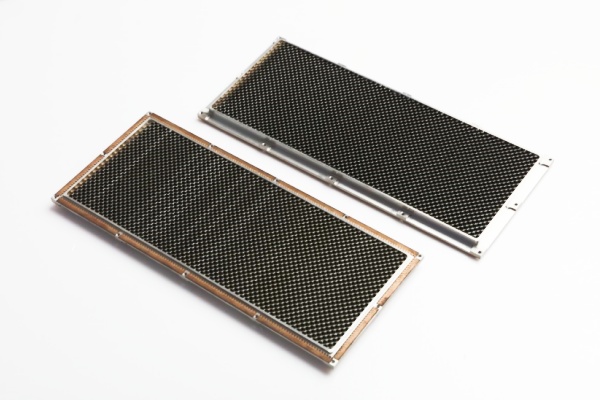
The problem with solid metal
Solid aluminum is strong. No question. But it's heavy. Every pound on an airplane costs fuel. So you don't want solid unless you have to.
You could make a ribbed structure – like corrugated cardboard. Lighter than solid. But it's strong in one direction only. Bend it the other way, it folds.
You need something strong in all directions. That's where honeycomb comes in.、
How honeycomb core works
Take thin foil. Corrugate it. Stack it with another corrugated sheet. You get hexagons.
Glue or braze the layers together. Now you got a block of little tubes.
Each tube can hold a lot of weight on end. Put hundreds of tubes together, they share the load. Crush one, the others keep working.
The walls are paper‑thin. But because they're hexagons, the load spreads across many walls. You get the strength of a solid block with a fraction of the weight.
That's specific strength. High strength, low weight.
Why hexagons, not squares?
Nature figured this out. Beehives are hexagons. Not squares, not circles.
Circles leave gaps. Squares have straight lines – stress cracks at the corners. Hexagons pack tight, no gaps, and the corners are less sharp. Stress spreads even.
It's the most efficient shape. Bees use it. We use it.
How much stronger?
A solid aluminum sheet 1 inch thick weighs a lot. A honeycomb panel with 1‑inch thick core and thin skins weighs about one‑fifth as much. But its bending stiffness? Same as solid.
You can stand on a 1‑inch thick honeycomb panel and it won't crush – if the skins are there. Without skins, you can poke a finger through. The skins are critical.
So specific strength of honeycomb sandwich is way higher than solid metal. That's why planes use it.
What the core is made of
For aerospace, three main materials.
Aluminum – common for floors. Light, strong, cheap enough.
Nomex – fire‑resistant paper. Used for overhead bins, sidewalls. Doesn't burn, but not as strong as metal.
Titanium – for hot areas near engines. Expensive.
Cell size matters. Smaller cells (1/8 inch) are stiffer. Larger cells (1/4 inch) are lighter but dent easier. Floors need small cells. Non‑structural panels can use bigger cells.
How it's made – real quick
Stack foil with glue lines. Press, heat. Then expand it like an accordion. The glue lines keep it from pulling apart all the way – you get hexagons.
That's the core.
Then glue skins on top and bottom. Skins are thin – 0.3 to 1.5 mm. Now you got a sandwich panel.
The core gives thickness. Thickness gives stiffness. The skins carry tension and compression.
Why aerospace loves it
Weight is everything on a plane. Honeycomb saves a lot.
Strength is still there. A floor panel can hold a loaded cargo cart. An overhead bin can hold bags without sagging.
Fire resistance – Nomex core and fiberglass skins don't burn. They char. That's a safety thing.
Fatigue – honeycomb panels don't crack like solid metal. The core absorbs vibration. They last.
What goes wrong
Nothing's perfect.
Delamination. The skins peel off the core. Glue fails, or water gets in. The panel loses most of its strength.
Crushing. Drop a heavy tool on a thin panel – dent. The core caves in.
Moisture. Water gets inside, freezes, expands. The panel bulges.
Edge crushing. Unsealed edges crush when you bolt them.
Seen all of these. Most from damage or age, not bad manufacturing.
Real example – airplane floor
A cargo plane had floor panels cracking at the edges. Old panels, tired glue, skins delaminating.
We made new ones with thicker skins and a denser core. Same weight, stiffer. Five years, no cracks.
Real example – overhead bin
A bin panel bulged. Water got in, froze, expanded. The Nomex core swelled.
Replaced it with a new panel with sealed edges. No more water.
Honeycomb core has the highest specific strength because it's mostly empty space. Thin walls in hexagons spread the load. Skins keep everything together.
Solid metal is stronger, but heavy. Ribbed structures are lighter, but strong only one way. Honeycomb is strong in all directions and light as hell.
That's why aerospace uses it. Floors, walls, bins, even some control surfaces. Nothing else gives you that much strength for that little weight.
We make these panels. Need one? Tell us the size, the load, the fire rating. We'll build it.
And if you tap it and it goes "thud" instead of "ring," call us. That's delamination. Time for a new one. Don't fly with a bad panel. That's just stupid.