To be a valuable global supplier
for metallic honeycombs and turbine parts


Contact number
0555-2813555
To be a valuable global supplier
for metallic honeycombs and turbine parts
Technological Innovation
Process Management
Continuous Improvement
Customer Satisfaction

Knowledge
Dedication
Diligence
Loyalty
Responsibility
Confidence
Tenacity
Respect

To be a valuable global supplier
for metallic honeycombs and turbine parts
Release time:2026-05-21
You need to let heat out. You need to keep RF in. Most people solve this with two separate parts – a ventilation grille and a shielding screen. Or a louver plus a waveguide panel.
But two parts means two mounting surfaces, two sets of gaskets, two places to leak. And more labor to install.
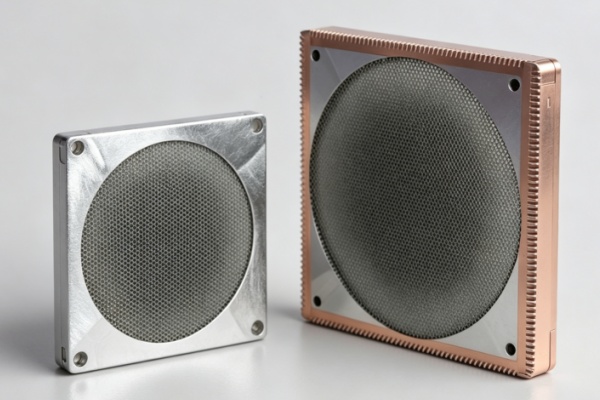
A combined panel – microwave shielding and ventilation in one – does both jobs in a single assembly. One frame. One gasket. One set of screws. Here's why that matters and where it makes sense.
This is the biggest one. Every seam is a potential RF leak. Every gasket is a potential failure.
A separate vent and shield has at least two frames. That means two interfaces to the cabinet. Two gaskets to compress. Two chances for installation error.
A combined panel has one frame. One gasket. One interface. Half the leak points.
In high‑shielding applications – military, medical, radar – that's a big deal. We've chased leaks in separate assemblies for hours. The leak was always at the joint between the vent and the shield. With a combined panel, that joint doesn't exist.
Two parts means two installation steps. Bolt up the vent. Then bolt up the shield. Make sure the gaskets align. Make sure the screw holes line up. It's slow.
One part means one installation. Bolt it on. Done. Less time on the assembly line. Less chance of screwing it up.
We had a customer who was installing separate louvers and waveguide panels on outdoor telecom cabinets. Each cabinet took 25 minutes just for the vent assembly. Switched to a combined louver‑waveguide panel. Installation dropped to 12 minutes. Over 500 cabinets, that saved over 100 hours of labor.
A separate vent and shield stacks two restrictions. Air goes through the vent, then through the shield. Each one adds pressure drop. Added together, it can choke your fans.
A combined panel can be engineered to reduce that stacking. The louvers and honeycomb are integrated – not just slapped together. We can optimize the open area across both.
One customer had a separate louver and waveguide. Pressure drop was 0.35 inches at 200 CFM. We redesigned as a single combined panel – same overall thickness, same cell size. Pressure drop dropped to 0.28 inches. Not huge, but meaningful.
Two parts take up more space than one. Even if they're stacked, the overall thickness is greater. In tight enclosures, that matters.
A combined panel can be designed to fit flush with the cabinet wall. No extra protrusion. No bulky adapter frame.
For outdoor cabinets with limited space behind the vent, that extra inch or two can make the difference between fitting the fan or not.
If you're a manufacturer, inventory is a pain. Separate vents and shields mean two part numbers. Two suppliers maybe. Two sets of spares.
A combined panel is one part number. One stock item. Less to track. Less to reorder.
One customer had four different vent types and three different shield types. That's 12 combinations. They switched to combined panels – four part numbers total. Inventory dropped. Mistakes dropped.
Separate parts from different suppliers might not use the same material. Aluminum vent, stainless shield. Now you have galvanic corrosion where they touch. Add moisture, and you get a battery. The aluminum corrodes.
A combined panel uses the same material throughout. Same alloy. Same plating. No galvanic issues.
For coastal or chemical plant installations, that's a big deal.
Testing a separate vent and shield means testing two parts. Maybe separately, maybe together. More paperwork.
A combined panel is one assembly. One test. One certificate. Simpler for compliance.
We've had customers spend weeks documenting separate vent and shield combinations for MIL‑STD‑461. Switched to a combined panel. One test report. Done.
Outdoor telecom cabinets. Need rain protection (louvers) and RF shielding. Combined louver‑waveguide panel saves space and labor.
Military shelters. High shielding requirements. Fewer leak points is critical.
Medical equipment. Tight spaces, strict emissions. One integrated part simplifies design.
Industrial control panels with limited real estate. Every inch matters.
If you already have a standard vent that you like and just need to add shielding, a separate screen might be easier.
If you need to mix and match – different vent types with the same shield – separate parts give you flexibility.
If weight is absolutely critical, separate parts might allow you to use a lighter vent. But the difference is usually small.
A customer had a base station cabinet with a louver vent and a separate waveguide shield bolted on the inside. They were having two problems. First, RF leakage at the seam between the louver and the waveguide. Second, the assembly was too thick – they couldn't fit the fan they wanted.
We designed a combined panel. Louver face, waveguide honeycomb, and a mounting flange all in one brazed assembly. Same shielding. Better airflow (no gap between layers). Thinner by 0.75 inches.
They switched all their sites. Leakage dropped. Fans fit. Installation time cut in half.
The cabinet for a medical linac needs high shielding and good cooling. They were using a separate vent and shield. The shield was heavy. The assembly was thick. And they had a chronic leak at the gasket between the two parts.
We built a combined panel with the honeycomb brazed directly into the vent frame. One piece. One gasket to the cabinet. Leak gone. Weight actually dropped because we eliminated the separate shield frame.
The customer said it was the first time they passed RF leakage test on the first try.
Customization cost. A combined panel is often custom – not off the shelf. If you need something very specific, you're paying for tooling.
Repair. If the honeycomb gets damaged, you replace the whole panel, not just the shield. For high‑volume, low‑cost applications, separate parts might be cheaper to repair.
Lead time. Combined panels take longer to manufacture than slapping together two off‑the‑shelf parts.
Do you offer combined panels? If not, find another supplier.
Can you integrate my existing vent design? Or do I have to start over?
What's the lead time for a custom combined panel?
Do you test the assembly as one unit? Ask for test data.
What gasket do you use between the panel and the cabinet? Should be conductive.
A combined microwave shielding ventilation panel is not always necessary. But in many applications, it simplifies installation, reduces leak points, saves space, and lowers inventory cost.
One frame. One gasket. One set of screws. One test report.
If you're designing a new cabinet or retrofitting an existing one, it's worth considering. Especially if you're fighting RF leaks or struggling with assembly time.
We make combined panels. We've seen the benefits firsthand. Not every job needs them. But when they fit, they work well. Fewer parts, fewer problems. That's usually a win.