To be a valuable global supplier
for metallic honeycombs and turbine parts


Contact number
0555-2813555
To be a valuable global supplier
for metallic honeycombs and turbine parts
Technological Innovation
Process Management
Continuous Improvement
Customer Satisfaction

Knowledge
Dedication
Diligence
Loyalty
Responsibility
Confidence
Tenacity
Respect

To be a valuable global supplier
for metallic honeycombs and turbine parts
Release time:2026-04-22
Fair question. They've been burned. First batch of metal honeycomb was great. Second batch was off. Cells not quite right. Brazing felt different. Backpressure changed. They had to rework their assembly line.
We don't do that. Here's how we get batch consistency every single time. Not "close." The same.
Foil – The Start of Batch Consistency
If the foil changes, nothing else matters. So we lock down our supply. Same mills, year after year. Same thickness, same alloy, same surface.
But we still check every coil. Thickness in three spots. Visual inspection. And a test braze on a little coupon.
That's the first step in our quality control process. If the foil fails any check, it doesn't go on the line.
We also keep a piece of every coil. Six months later, customer has a problem, we can go back and look.
Tooling – Change It Before It Drifts
Forming rolls wear. Run enough foil through, and cell shape starts to drift. That kills metal honeycomb uniformity.
We don't wait for the gauge to say it's bad. We change rolls after a set number of feet. On a schedule.
Keep logs. Which roll, when it went in, how many feet, when it came out. New rolls go in, we check cell size every hour for the first shift.
Same for stacking fixtures and mandrels. Inspected and replaced on a schedule. Not "when it looks bad."
Furnace – Watch It or Lose Batch Consistency
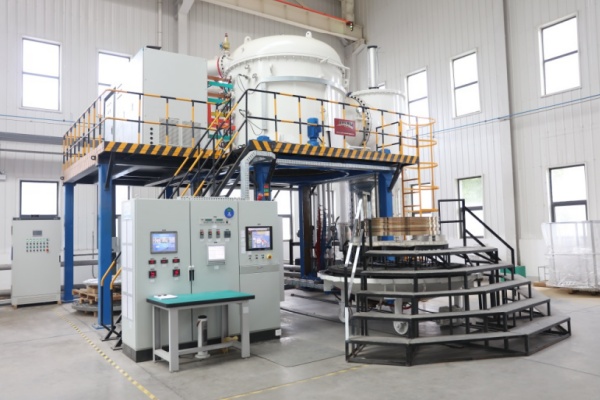
Furnace is where catalytic substrate batch consistency lives or dies. Temperature profile changes? Brazing changes.
We have thermocouples inside, not just on the controller. Log every cycle. Ramp rate, soak time, cooling rate.
Before every shift, run a test coupon through. Then peel test it. If it fails, no production until we fix it.
Maintenance schedule: burners cleaned, gas flows checked, thermocouples replaced. Don't wait for something to break.
Peel Test – Every Batch, One Sacrifice
No exceptions. Every batch, big or small, we kill one substrate. Clamp a layer in a vise, pull.
If the foil tears before the braze lets go, good. If the braze separates clean, the whole batch is junk. Doesn't ship.
Keep those peeled samples in a file. Labeled with batch number and date. Two years later, customer has a problem, we can go back and look.
Flow Test – Same Rig, Same Numbers
We have a flow bench. Same test settings every time. Same air flow, same temp.
We know what pressure drop should be for that cell density, foil thickness, length. Number off – high or low – flag the batch.
Keep records. Customer says "your backpressure is higher than before" – we pull the data and compare.
That's part of our quality control process that catches drift before it becomes a problem.
Light Test – Shine a Light Through
Every batch gets the light test. Shine a light through the metal honeycomb. Uneven pattern – dark spots, streaks – cells aren't straight. Rework or scrap.
Then visual inspection on every single substrate. Operators look for cracks, dents, anything weird. They've been doing this long enough to spot stuff a machine might miss.
Dimensions – It Has to Fit
Measure a sample from every batch. Diameter, length, ovality. Custom shapes get a go/no‑go fixture.
Out of spec? Doesn't ship. Gauge doesn't argue.
Also send random samples to the lab for full coordinate measurement. Catches drift a simple diameter check might miss.
Traceability – So We Know What Happened
Every batch gets a number. That number follows the parts.
We record which foil coil, which forming rolls, which operator, which furnace cycle, all test results.
Customer has a problem? We trace that catalytic substrate back to the exact coil and furnace run. Tells us if it's a one‑off or something systematic.
Also keep a "lessons learned" log. Every time something goes wrong, write down what happened and what we changed. Review every month.
When Things Go Wrong
Even with all this, stuff happens. Furnace drifts. Coil of foil is bad. Tool wears faster than we thought.
When that happens, we stop. Don't ship. Figure out what went wrong, fix it, re‑run the batch.
Then document it. So we don't make the same mistake twice.
I remember a batch where the peel test failed on three samples. Scrapped the whole run. Cost time and money. But we learned the furnace atmosphere got contaminated. Cleaned the system, ran a dozen test coupons, verified the atmosphere before starting production again.
That batch never shipped. Customer never even knew there was a problem. That's how batch consistency should work.
Customers Can Check
We actually want customers to test our catalytic substrates when they get them.
Measure cell density. Put one on a flow bench. Check dimensions. Cut one open and look at the braze.
Find a problem? Tell us. We'll pull our records and figure out what happened. And we'll make it right.
We have customers who've sent us their test results for years. Data is boring – same numbers, batch after batch. That's exactly what we want for metal honeycomb uniformity.
Catalytic substrate batch consistency doesn't happen by accident.
Lock down the foil. Change tooling on a schedule. Watch the furnace. Peel test every batch. Flow test. Light test. Measure. Keep records. Learn from mistakes.
That's our quality control process. We don't ship a batch until we're sure it's the same as the last one. Not close. The same.
One boring batch at a time. That's how you earn trust.