To be a valuable global supplier
for metallic honeycombs and turbine parts


Contact number
0555-2813555
To be a valuable global supplier
for metallic honeycombs and turbine parts
Technological Innovation
Process Management
Continuous Improvement
Customer Satisfaction
Knowledge
Dedication
Diligence
Loyalty
Responsibility
Confidence
Tenacity
Respect

To be a valuable global supplier
for metallic honeycombs and turbine parts
Release time:2026-04-21
I've had customers ask me "how do you know your substrates are good?" They think there's one big test at the end that catches everything.
There isn't.
You can't inspect quality into a part. You have to build it in along the way. Every step. From the moment the foil comes in the door to the final check before it goes in a box.
We've been doing this long enough to know where things go wrong. Here's our end‑to‑end quality process. It's not fancy. It's just a bunch of small checks that add up to a reliable part.
Step One: Incoming Foil – Don't Trust the Supplier
The foil is the starting point. If the foil is bad, nothing else matters.
We buy coils of aluminum and stainless from a handful of suppliers. Some we've worked with for years. But we still check every coil when it arrives.
First, thickness. We measure with a micrometer at three spots – edge, middle, edge. The spec is usually 0.05 mm plus or minus a few microns. If it's outside that, the coil goes back.
Second, surface. We unroll a few feet and look at it under a bright light. Any oil? Any oxidation? Any scratches? If it's dirty, the brazing won't stick.
Third, test braze. We cut a small coupon from every coil, braze it in a lab furnace, then try to peel it apart. If the bond fails, the whole coil is rejected.
We learned this the hard way. A supplier changed their rolling process without telling us. The foil looked fine. But the brazing failed on three production batches. We scrapped everything. Now we test every coil like we don't trust anybody.
Step Two: Forming – Watch the Tools Wear
The flat foil goes through forming rolls that turn it into corrugations. Those rolls wear over time. If they wear unevenly, the cell shape changes.
We check cell dimensions every hour. We have a little metal gauge that fits into the cells. If it's tight or loose, we stop the line and change the rolls. We don't wait until the end of the shift.
We also track how many feet each set of rolls has processed. After a set number, we replace them whether they look worn or not. Preventive maintenance.
I've seen shops run rolls until they're obviously damaged. By then, they've already made hundreds of bad parts. We don't work that way.
Step Three: Stacking or Winding – Count Twice
For round substrates, we wind the foil around a mandrel. The operator has to stop at the right diameter. We have a gauge that measures diameter as it winds. When it hits the mark, stop.
For oval or rectangular substrates, we stack flat strips in a fixture. The operator counts the layers. Then a supervisor spot‑checks the count. One layer too many or too few changes the cell density.
The fixture has guide pins to keep the layers aligned. Before the stack goes into the furnace, we do a light test. Shine a light through. If the light pattern is uneven, the cells are crooked. That stack gets reworked or scrapped.
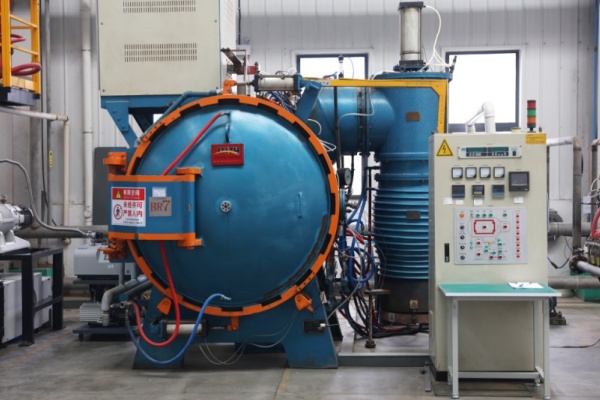
Step Four: Brazing – The Make‑or‑Break Point
The stacked foil goes into the furnace. This is where the layers bond together.
We control the furnace temperature with thermocouples inside the chamber, not just the controller. The temperature profile has to be the same every time. We log it.
The atmosphere inside the furnace is critical. Oxygen kills the braze. We use a reducing atmosphere – hydrogen or nitrogen – and monitor it constantly.
After every batch, we pull a sample and do a peel test. Clamp one layer in a vise, pull. If the foil tears before the braze lets go, it's good. If the braze separates clean, it's bad. No argument.
If the peel test fails, the whole batch gets reworked or scrapped. We don't ship it.
One night, the furnace drifted cold. Nobody noticed until morning. We tested the batch – all failures. Scrapped the whole run. The operator was upset. But shipping bad parts would have been worse.
Step Five: Canning – Fit Matters
The brazed substrate gets wrapped in a mounting mat and pressed into the metal can.
We weigh the substrate and the mat before canning. The mat has to be the right size for the gap. We control the gap to within a few tenths of a millimeter.
The press has a pressure gauge. We know how much force it should take to push the substrate into the can. Too little force means the mat is too loose – the substrate will rattle. Too much force means the fit is too tight – the substrate might crack.
After canning, we check the substrate for cracks by tapping it with a wrench. A solid substrate rings. A cracked one sounds dull.
We also measure the overall length of the canned converter. If the substrate shifted during canning, the length will be off.
Step Six: Coating – Not Too Much, Not Too Little
We don't do coating in‑house – we work with partners. But we still control the process.
Before coating, we weigh the substrate. After washcoat, we weigh it again. The weight gain tells us how much washcoat is on there. Too much and the cells might plug. Too little and there's not enough surface area.
After precious metal coating, we weigh again. The weight gain tells us the loading. We have targets for platinum, palladium, and rhodium based on the application.
We send samples to a lab for assay – they dissolve the coating and measure the precious metal content exactly. That's expensive, so we do it on every new formulation and whenever something looks off.
Step Seven: Final Testing – Prove It Works
Before any batch ships, we test samples.
Flow test. Put a sample on a flow bench, run air through, measure backpressure. If it's too high or too low, the batch doesn't ship.
Light test. Shine a light through the substrate. Dark spots mean clogged cells. Streaks mean crooked cells.
Visual inspection. Look for cracks, dents, or anything unusual.
We also keep a record of every batch. The foil coil number, the operator, the furnace cycle, the coating batch, the test results. If something comes back from the field, we can trace it.
Step Eight: Packaging – Handle With Care
Substrates are fragile before they're canned. We pack them in foam‑lined boxes, separated by dividers. No rattling.
For overseas shipping, we use pallets with shrink wrap and edge protectors. We've shipped tens of thousands of parts overseas with very few damage claims.
We label every box with the batch number, part number, and quantity. The label goes on the box and on the packing list.
What We Don't Do
We don't skip steps to save time.
We don't trust our suppliers without checking.
We don't assume a batch is good because the last batch was good.
We don't ship parts that fail any test.
I've seen other shops do all of those things. They save a few minutes or a few dollars. Then they get returns. Angry customers. Lost business.
We'd rather spend the time upfront.
End‑to‑end quality control isn't one big test. It's a dozen small checks.
Check the foil when it comes in. Check the forming every hour. Check the stacking count. Check the brazing with peel tests. Check the canning fit. Check the coating weight. Check the final flow and light test.
Skip any one of those, and you might ship a bad part. Maybe not today. Maybe not tomorrow. But eventually.
We've been doing this long enough to know that cutting corners always catches up with you.
So we don't.