To be a valuable global supplier
for metallic honeycombs and turbine parts


Contact number
0555-2813555
To be a valuable global supplier
for metallic honeycombs and turbine parts
Technological Innovation
Process Management
Continuous Improvement
Customer Satisfaction

Knowledge
Dedication
Diligence
Loyalty
Responsibility
Confidence
Tenacity
Respect

To be a valuable global supplier
for metallic honeycombs and turbine parts
Release time:2026-04-03
I've been under enough cars to hear the same thing over and over. "I want to take the converter off. It's choking my engine." People think catalytic converters are just exhaust obstacles. Something the government made them put on.
And yeah, a bad converter will choke an engine. A clogged one. A cheap one with bad flow. But a quality converter? That's different. It actually helps the engine do its job.
Here's what I've learned about how a good catalytic converter makes an engine run better, not worse.
It's About Backpressure
The old way of thinking was simple. Straight pipe flows best. Anything in the exhaust slows things down.
That's not wrong, exactly. But it's not the whole story.
Engines need some backpressure. Not a lot. But some. It helps with scavenging—the way exhaust pulses help pull the next charge out of the cylinder. Too little backpressure and you actually lose low-end torque. The engine feels flat off the line.
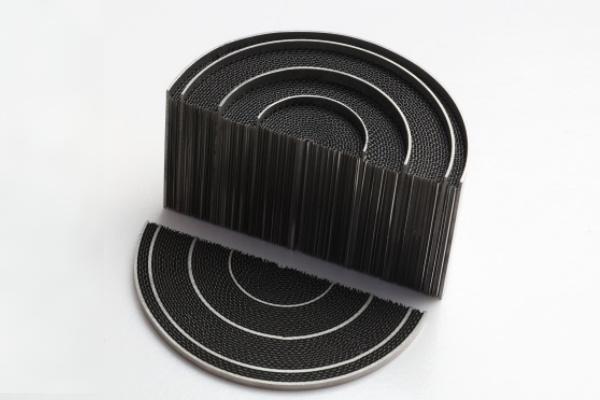
A quality catalytic converter is designed with that in mind. The honeycomb cells are sized and shaped to keep backpressure low while still doing the job. 400 cells per square inch with thin walls flows almost like an open pipe. You're not losing power. You're not losing efficiency.
Cheap converters use smaller cells or thicker walls. They flow less. The engine has to push harder to get the exhaust out. That takes energy. That burns more fuel.
The Sensor Feedback Loop
Modern engines have oxygen sensors before and after the converter. They're constantly watching the exhaust. The engine computer uses that data to adjust the fuel mixture.
If the converter is working right, the downstream sensor sees clean exhaust. The computer knows everything is good. It runs the engine at the ideal air-fuel ratio.
If the converter is cheap or failing, the downstream sensor sees something it doesn't like. The computer doesn't know why. It might start second-guessing itself. It might richen the mixture to be safe. Or lean it out. Either way, you're not running at peak efficiency.
I've seen cars with bad converters that lost 2 or 3 miles per gallon just from the computer getting confused. The engine was fine. The converter was the problem. Put a quality one on, and the mileage came back.
Heat Management
Catalytic converters get hot. That's how they work. But a good converter manages that heat.
The substrate material matters. Quality converters use high-grade stainless or specialized alloys that handle high temperatures without breaking down. They also have better thermal insulation. The heat stays in the exhaust stream where it helps the converter work.
Cheap converters radiate heat into the engine bay. That heats up the intake air. Hot air is less dense. Less dense means less oxygen. Less oxygen means less power and worse fuel economy.
I've opened hoods on hot days and felt the difference. A car with a quality converter has a cooler engine bay. That matters when you're sitting in traffic or towing a trailer.
Light-Off Time
A converter doesn't work when it's cold. It has to heat up first. That's called light-off.
Quality converters light off faster. Thinner walls. Better catalyst formulation. The converter gets to temperature quicker. That means the engine spends less time running in open loop—the warm-up mode where the computer ignores the oxygen sensors and runs a richer mixture.
Fast light-off means less time running rich. Less time wasting fuel. Better fuel economy from the moment you start the car.
Cheap converters take longer to light off. Some never really light off properly. The engine stays in open loop longer. You burn more fuel every cold start. Over a year of commuting, that adds up.
Consistency Over Time
Here's something nobody talks about. A quality converter stays consistent.
The day you install it, it works a certain way. A year later, it works the same way. Five years later, same thing. The substrate holds up. The catalyst stays active. The flow characteristics don't change.
Cheap converters degrade. The cells crack. The coating wears off. The backpressure creeps up. The engine has to work harder to push exhaust through. You don't notice it day to day. But over time, your fuel economy drops. Your power drops. The car just feels tired.
I've seen cheap converters that lost 10 percent of their flow within two years. That's like driving with a partially clogged exhaust. The engine efficiency goes right down with it.
What the Dyno Says
We've run tests on the dyno. Same car. Same engine. Same day. Different converters.
Stock converter first. Baseline numbers.
Then a cheap aftermarket converter. Power dropped. Not a lot. Maybe 3 or 4 horsepower. But the torque curve shifted. The engine didn't pull as hard in the mid-range. Fuel consumption went up about 5 percent at cruising speed.
Then a quality converter. Power came back. Actually gained a couple horsepower over stock in some parts of the curve. Torque felt smoother. Fuel consumption was back to baseline, maybe a hair better.
The cheap converter cost the owner money every time they drove. The quality converter didn't.
What to Look For
If you're buying a catalytic converter and you care about engine efficiency, here's what I'd check.
Cell density. 400 cpsi is standard for most cars. That flows well. Lower cell density flows even better but doesn't clean as well. Higher flows worse.
Substrate material. Stainless holds up. Aluminum doesn't in the long run. Look for stainless if you want consistency.
Brand reputation. Some aftermarket brands are known for quality. Some are known for being cheap. The cheap ones are cheap for a reason.
Warranty. A quality converter will have a warranty. Not just 12 months. Years. The manufacturer is betting it will last.
OBDII compliance. If the converter is CARB-compliant or EPA-compliant, it's been tested. That doesn't guarantee efficiency, but it's a good sign.
The Bottom Line
A catalytic converter doesn't have to hurt engine efficiency. A bad one does. A cheap one does. But a quality converter? It's designed to flow well, light off fast, manage heat, and stay consistent over time.
The engine doesn't have to work harder. The computer stays happy. The fuel economy stays where it should be.
I've seen enough cars with cheap converters to know the difference. The owners save a few bucks upfront and spend it back at the pump. Or they replace the cheap converter twice in the time a good one would still be working.
A quality converter costs more. It's worth it. Not just for emissions. For efficiency. For power. For not having to think about it again.