To be a valuable global supplier
for metallic honeycombs and turbine parts


Contact number
0555-2813555
To be a valuable global supplier
for metallic honeycombs and turbine parts
Technological Innovation
Process Management
Continuous Improvement
Customer Satisfaction
Knowledge
Dedication
Diligence
Loyalty
Responsibility
Confidence
Tenacity
Respect

To be a valuable global supplier
for metallic honeycombs and turbine parts
Release time:2026-03-28
I've been in this business long enough to know that talk is cheap. Anyone can say they make good catalytic substrates. The real question is how they actually build them. What happens on the shop floor. What gets checked. What doesn't.
Here's what we do.
Where It Starts: The Foil
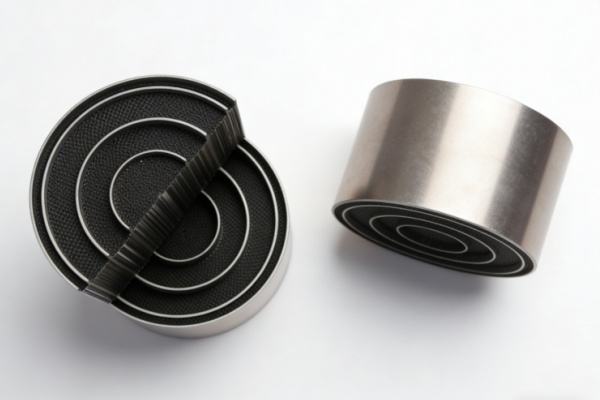
Every substrate starts with metal foil. Thin stuff. For most automotive applications, we're talking 0.05 mm or less. A few microns variation doesn't sound like much, but when you're stacking layers, it adds up.
We buy foil from suppliers we've worked with for years. Not the cheapest. The ones who deliver consistent thickness and clean surfaces. Because dirty foil doesn't braze. Oily foil doesn't braze. Oxidized foil doesn't braze.
Every coil gets checked when it comes in. Thickness. Surface condition. We run test bonds to make sure it'll take. If the foil isn't right, it doesn't go on the line. Simple as that.
I learned that lesson early. Had a supplier change their process once without telling us. The foil looked fine. Felt fine. But the brazing went sideways. Took us a week to figure out what changed. Now we test every coil.
Forming the Cells
The foil goes through forming rolls that turn flat metal into corrugated shapes. Two layers stacked together make the honeycomb cells.
This is where precision matters. Cell size determines flow and conversion efficiency. If the cells aren't uniform, the flow isn't uniform. That means the catalyst doesn't work as well.
We check cell dimensions regularly. Tools wear. We replace them before the parts drift out of spec. Not after. Every shift starts with a sample pull. We measure cells. We look for crushed or misaligned spots. If something's off, we stop and fix it.
I've seen shops run tooling until it's obviously worn. By then, they've already made a batch of bad parts. We don't work that way.
Stacking and Assembly
After forming, the layers get stacked. This sounds simple. It's not.
The number of layers has to be right. Count them. Sounds obvious, but I've seen people miscount. One layer too many or too few changes the cell density and the overall dimensions.
Alignment matters too. The layers need to line up so the cells are straight through the whole piece. If they shift during stacking, you get misaligned channels. That messes with flow. It creates hot spots. It kills conversion efficiency.
We use fixturing to hold everything in place. Not just operator skill. The fixture keeps the stack square while it gets assembled. It goes into the furnace the same way every time.
Brazing: The Make-or-Break Step
This is where good substrates get made and bad ones get discovered.
The furnace heats the stack to the right temperature. Hot enough to melt the brazing filler. Not hot enough to melt the foil. The atmosphere in the furnace matters too. Oxygen will ruin a braze. We control it.
Temperature has to be dead on. Too low and the filler doesn't flow. The layers don't bond. The substrate looks fine coming out, but tap it and it sounds dull. A few months of vibration and heat, and it comes apart.
Too high and the filler runs where it shouldn't. Cells clog. The foil gets damaged. The part is scrap.
We monitor every batch. Temperature profile. Atmosphere. Time at temperature. We know what a good braze looks like. The color tells you. The feel tells you. New guys learn from the old guys.
Every batch, we pull a sample and peel it apart. If the bond isn't solid, the whole batch gets reworked or scrapped. We don't ship it. I've seen shops that skip this test. They figure if the parts look okay, they're probably fine. Probably isn't good enough when your parts are going into someone's engine.
Final Inspection
Once the substrates come out of the furnace, the checklist gets long.
Cell density gets checked. For automotive, that's usually 400 cells per square inch or higher. Count the cells in a given area. Make sure it matches the spec.
Dimensions get measured. Diameter. Length. Ovality. Even a millimeter off can cause installation problems. A substrate that doesn't fit the can is a substrate that doesn't ship.
Structural integrity gets tested. Some shops do a crush test on a sample. We do a pressure test on every batch. Flow air through and measure the pressure drop. Too high means something's wrong with the cell structure. Too low means cells might be damaged or missing.
We also do a visual inspection on every part. Cracks. Deformations. Anything that doesn't look right. The guys doing this have been at it long enough to spot problems that a machine might miss.
Traceability
Here's something that doesn't get talked about enough. If you can't trace a part back to when it was made and what material it came from, you can't fix problems when they show up.
We keep records on every batch. Which coil of foil. Which operator ran the forming press. Which furnace cycle. What the test results were.
When something fails in the field—and eventually something always fails—that traceability lets us figure out what went wrong and whether other parts are at risk. Without it, you're guessing. Guessing doesn't help your customer.
I've worked with shops that had no traceability. When a customer called with a problem, they had no idea where that part came from. That's not how we do things.
What We Don't Do
I'll be honest about what we're not.
We're not the biggest manufacturer out there. If you need millions of substrates for a mass-market automotive program, there are shops better suited for that. We do the mid-volume stuff. Thousands. Tens of thousands. Not millions.
We're not the cheapest. We don't cut corners on foil. We don't skip testing. We don't use cheap filler material. That means our price isn't the lowest. But our parts work. And they keep working.
We're not fast if you need something tomorrow. Quality takes time. Testing takes time. If you're in a rush, we're probably not your best option.
What We Do Well
We do consistency. Batch after batch. The same cell density. The same dimensions. The same backpressure. When a customer gets a shipment, they know what's in the box.
We do custom sizes and shapes. Round is easy. Oval, rectangular, D-shaped? We've done them all. It takes tooling and time, but we can do it.
We do stainless for marine and coastal applications. Not everyone does. Aluminum works for most cars. For boats, for coastal trucks, for anything near salt, you need stainless. We keep both on hand.
We do traceability. Every batch has a number. We know what went into it. When a customer calls with a question, we can answer it.
A Job I Remember
We had a customer a few years back. They were building diesel engines for marine use. Needed substrates that would hold up in salt water. Not just the can. The substrate itself.
We worked with them on material selection. Stainless. Not aluminum. Different cell density than standard automotive. Different foil thickness. Everything had to be right for the application.
First batch took a while. Tooling had to be set up. Process had to be dialed in. But we got it right. That customer is still with us. They know when they order from us, they're getting parts that will last in the environment their engines run in.
That's the kind of work we're good at. Not the highest volume. The ones that need to be right.
Why Customers Stick With Us
I think it comes down to a few things.
We're honest about what we can and can't do. If a job isn't right for us, we say so. We don't take orders we can't deliver on.
We test. Every batch. We know what we're shipping. When a customer gets a substrate from us, they don't have to wonder if it's going to hold up.
We stand behind what we make. If something fails and it's our fault, we make it right. That doesn't happen often. But when it does, we take care of it.
And we've been doing this long enough to know what matters. The foil. The forming. The brazing. The testing. The details that separate a part that works from one that doesn't.
Bottom Line
Making catalytic substrates isn't glamorous work. It's thin foil, precise forming, controlled brazing, and thorough testing. It's catching problems before they ship. It's knowing what your customer actually needs.
We've been doing it long enough to be good at it. We're not the biggest. We're not the cheapest. But we make parts that work, on time, batch after batch.
For the customers who need that, it's enough.