To be a valuable global supplier
for metallic honeycombs and turbine parts


Contact number
0555-2813555
To be a valuable global supplier
for metallic honeycombs and turbine parts
Technological Innovation
Process Management
Continuous Improvement
Customer Satisfaction

Knowledge
Dedication
Diligence
Loyalty
Responsibility
Confidence
Tenacity
Respect

To be a valuable global supplier
for metallic honeycombs and turbine parts
Release time:2026-03-27
I get calls like this all the time. Someone bought cheap shielding vents from somewhere online. Saved a few bucks. A year later, their equipment is acting up. Random glitches. Intermittent failures. They've tested everything else. Finally someone thinks to check the vents.
And sure enough, the vents are the problem.
I've seen enough failed cheap vents to know where they cut corners. Here's what goes wrong—and what we do differently so it doesn't happen to our customers.
The Brazing Falls Apart
This is the big one. The one I see most often.
The vent looks fine from the outside. But the honeycomb isn't really bonded to the frame. Or the layers aren't bonded to each other. It held together long enough to ship. A few months of vibration and thermal cycling, and the joints start letting go.
I've pulled vents where you could literally shake them and hear the honeycomb rattling inside the frame. The shielding was gone. Might as well have left the hole open.
What happened? The brazing temperature was off. Maybe the furnace wasn't calibrated right. Maybe they rushed the cycle to save time. Maybe they used cheap filler material. Whatever the reason, the bond didn't take.
We test every batch. We pull a sample and peel it apart. If the bond isn't solid, the batch doesn't ship. We also track our furnace temperature religiously. We know what a good braze looks like coming out. New guys learn from the old guys.
The Gasket Takes a Set
Another common failure. Cheap vents come with cheap gaskets. Usually foam. It compresses when you bolt the vent on. Looks fine at installation.
A year later, that foam has taken a permanent set. It doesn't spring back anymore. The thermal cycling, the compression, the age—it all adds up. Now there's a gap between the vent and the enclosure. A small gap. But at high frequencies, small gaps leak like crazy.
We use silicone rubber for environmental seals. Closed-cell. It doesn't soak up water. It stays flexible when it's hot and when it's cold. It doesn't take a permanent set after a year of compression.
For the EMI seal, we use conductive gaskets—silver-filled silicone or beryllium copper fingers. These are designed to maintain contact over years of use. Not the same as hardware store foam.
The Material Was Wrong
Cheap vents often use whatever metal is cheapest. Sometimes it's aluminum with no corrosion protection. Sometimes it's a mystery alloy that's "basically stainless."
Put that vent near the coast or anywhere with road salt, and it starts corroding. The honeycomb pits. The frame flakes. The shielding drops off as the surface conductivity goes away.
I've seen cheap vents that looked like they'd been sitting in salt water for a year after just one winter. The aluminum was turning to powder. The customer thought they got a deal. They ended up buying twice.
We use aluminum for standard applications. For coastal or marine, we use 316L stainless. We don't mix metals. We don't use mystery alloys. The material is what we say it is.
The Frame Warped
Cheap vents sometimes use thin frames. Saves material cost. Makes the vent lighter. Seems like a win.
Then someone installs it. They tighten the bolts. The frame bends. Not a lot. Just enough to bow in the middle. Now the gasket isn't compressing evenly. There's a gap in the center. Or the corners are tight and the edges are loose.
We use frames thick enough to stay flat under proper bolt torque. We also give customers torque specs. Use a torque wrench. Don't just crank until it feels tight. We've learned that one the hard way.
The Cell Size Was Wrong
This one's harder to see. The vent looks right. The honeycomb looks like honeycomb. But the cell size is wrong for the frequencies it's supposed to shield.
Cheap manufacturers sometimes use a one-size-fits-all approach. Same honeycomb for everything. If the customer doesn't know to ask about cutoff frequency, they never find out until the vent fails in the field.
We size the cells to the application. Standard honeycomb with 1/8-inch cells works for most telecom and industrial applications. For higher frequencies, we go smaller. For more attenuation, we go deeper. We don't guess. We do the math. Then we test to make sure.
No Testing at All
This one surprises people. Some shops don't test their vents. They make them, box them, ship them. Never put a spectrum analyzer on a single one.
They figure if the math is right, the vent works. And the math is usually right. But materials vary. Process varies. Tools wear. Without testing, you don't know when something drifted.
We test every batch. Not one sample from the batch. Enough samples to know the whole batch is right. We test across the frequency range the vent is supposed to shield. Not just one frequency.
We also test after environmental exposure. Salt spray. Thermal cycling. Vibration. If it passes the lab test but fails in the field, the test was worthless. We put our vents through what they'll see in real life.
The Customer Who Learned the Hard Way
I had a customer a few years back. They were building enclosures for a telecom project. Needed a few hundred vents. They found a cheap supplier online. Price was half of what we quoted. They went with the cheap one.
Eighteen months later, they called me. The project was having problems. Random errors. Intermittent failures. They'd replaced boards, swapped power supplies, checked everything. Finally someone looked at the vents.
The honeycomb was rattling in the frames. The gaskets had hardened. Some of the vents had corrosion starting around the edges. The shielding numbers were way down from what they were when new.
They replaced all of them with our vents. Problems went away. They paid twice for the job. The cheap vents cost them more in the long run.
What We Do Differently
Here's the short version.
We braze right. We test every batch. We don't skip the destructive testing. We know what a good bond looks like.
We use good gaskets. Silicone for weather. Conductive for EMI. No foam that takes a set after a year.
We use the right material for the job. Aluminum where it works. Stainless where it doesn't. No mystery alloys. No mixing metals that shouldn't be mixed.
We build frames thick enough to stay flat. We give torque specs. We make sure the vent seals when it's installed right.
We size cells to the application. Not one-size-fits-all. We do the math. We test the result.
We test. Not once in a while. Every batch. Across the frequency range. After environmental exposure. We know what we're shipping.
Bottom Line
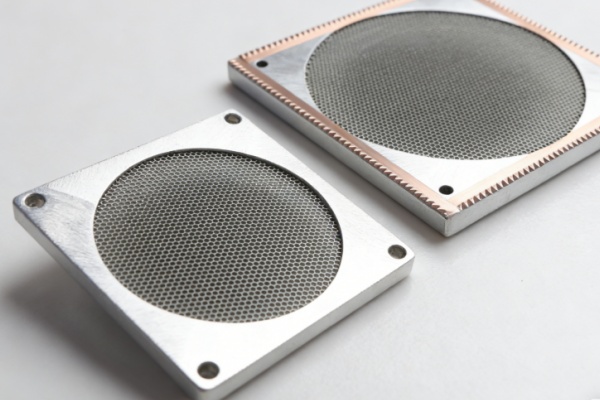
Cheap vents fail because they cut corners. Brazing. Gaskets. Materials. Frames. Cell sizing. Testing. Somewhere in that list, they saved a few dollars.
Those few dollars cost the customer more in the long run. Field failures. Troubleshooting time. Lost productivity. Replacement parts. Sometimes reputation.
We don't cut corners. We've been doing this long enough to know what matters. The brazing has to be solid. The gasket has to seal. The material has to last. The frame has to stay flat. The cells have to be right. The testing has to prove it works.
That's our quality advantage. We do the things cheap suppliers skip. And when a customer tries the cheap ones first and then comes to us, they understand why.