To be a valuable global supplier
for metallic honeycombs and turbine parts


Contact number
0555-2813555
To be a valuable global supplier
for metallic honeycombs and turbine parts
Technological Innovation
Process Management
Continuous Improvement
Customer Satisfaction

Knowledge
Dedication
Diligence
Loyalty
Responsibility
Confidence
Tenacity
Respect

To be a valuable global supplier
for metallic honeycombs and turbine parts
Release time:2026-03-26
I get asked this a lot. People try cheaper vents first. They're disappointed. Then they call us and say "what do you do that they don't?" Fair question.
Here's what's actually different.
It's All About the Cells
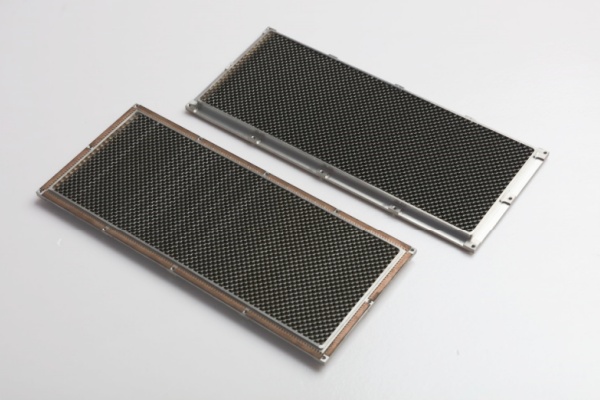
The theory isn't complicated. If you make the holes small enough and deep enough, electromagnetic waves can't get through. Air goes right through. Signals bounce around inside the cells and die before they make it out.
That's waveguide below cutoff. Works every time if you get the numbers right.
We've been running these numbers for years. For most applications, 1/8-inch cells with half-inch depth covers the frequencies people need. For higher frequencies, we go smaller. For more attenuation, we go deeper.
The cheap vents you see online? Half the time the cell size is wrong for what they claim. Or the depth isn't there. Sometimes they just punch holes in a sheet and call it a waveguide. That's not how it works. You need the cell structure.
Material Choice Isn't Complicated But People Get It Wrong
Aluminum works for most jobs. Good conductivity. Light. Easy to form.
But aluminum doesn't like salt. Put it on a coastal site or anywhere near road salt, and it starts pitting. The shield goes with it.
So for marine or coastal, we use stainless. 316L. Same geometry. Same shielding numbers. But it lasts where aluminum would turn to powder.
Some shops try to save money by using cheap aluminum with no protection. Or they call something stainless when it's really some other alloy. Looks the same coming out of the box. Doesn't last the same a year later.
Brazing Is Where the Corners Get Cut
I'll be honest. Brazing is the hardest part. And it's where most shops cut corners.
The honeycomb has to bond to the frame. The layers have to bond to each other. Every joint has to be solid. If it's not, the vent looks fine but the shield isn't there.
We run a furnace with controlled atmosphere. Temperature gets logged. Every batch, we peel apart a sample to check the bond. If it's not solid, the batch doesn't ship.
I've seen vents from other places where the brazing was spotty. The honeycomb was attached in some spots but not others. Held together well enough to survive shipping. A few months of vibration and temperature changes, and the bond started failing. Shielding dropped. Customer spent weeks chasing a problem that started with a vent that was never right to begin with.
The Frame Does More Than Hold Things Together
People think the honeycomb does all the shielding work. It doesn't. The frame carries the electrical path from the honeycomb to the enclosure. If that path breaks, the vent is just a hole with a screen over it.
We machine frames from the same material as the honeycomb. Aluminum with aluminum. Stainless with stainless. Mix metals and you get galvanic corrosion. Corrosion creates resistance. Resistance kills shielding.
We also design the frame to take a conductive gasket. The gasket fills any gaps between the vent and the enclosure. No gasket means a gap. Even a small gap at high frequencies is a leak.
Some shops sell vents without gaskets or with cheap foam that doesn't conduct. Looks fine. Doesn't work.
The Gasket Is What Makes the Seal
We put as much thought into gaskets as the vent itself.
For weather sealing, we use silicone rubber. Closed-cell. Water doesn't soak through. Stays flexible when it's hot and when it's cold.
For EMI, we use conductive gaskets. Silver-filled silicone or beryllium copper fingers, depending on the job. The gasket has to compress the right amount. Too little and there's a gap. Too much and it splits or takes a permanent set.
We test gasket compression. We know what the bolt torque should be. We tell customers what to use. I've seen people overtighten and crush the gasket. Or undertighten and leave a gap. Either way, the shield fails. We give them numbers to avoid that.
We Test Because You Can't See It
Shielding effectiveness is invisible. You can't look at a vent and know if it works. You have to measure it.
We test every batch on a spectrum analyzer. Not one sample from the batch. Enough to know the whole batch is right. We test across the frequency range the vent is supposed to shield. Not just one frequency. The whole range.
We also test after environmental stuff. Salt spray. Heat cycles. Vibration. If it passes the lab test but fails in the field, the test was worthless. We put our vents through what they'll see in real life.
Some shops don't test at all. They do the math and call it good. The math is right most of the time. But materials vary. Process varies. Without testing, you don't know when something drifted. We test so we know.
Custom Shapes Are Harder Than They Look
We do custom shapes. Round, square, rectangle, D-shaped, whatever fits your box.
The hard part is keeping the same shielding performance when the shape changes. The geometry has to stay right. The brazing has to stay solid. The frame has to stay flat.
We build our own tooling for custom shapes. Forming rolls. Stacking fixtures. Brazing fixtures. All in-house. That means we control the quality. We don't outsource tooling to someone who doesn't understand what we're building.
First batch of a custom shape takes longer. Tooling takes time. Dialing in the process takes time. Once it's dialed in, the next batches move faster. And they're consistent. That's the point.
What We've Learned the Hard Way
We've been making these vents long enough to know what fails and why.
Stainless frames with aluminum honeycomb? That fails. Corrosion at the joint kills the shield. Now we match materials or we don't take the job.
Foam gaskets take a set. After a few years, they don't spring back. Now we use silicone for weather seals and conductive gaskets for EMI.
Uneven bolt torque warps the frame. Warped frame means uneven gasket compression. Uneven compression means gaps. Gaps mean leaks. Now we give customers torque specs and tell them to use a torque wrench.
Testing is cheaper than warranty claims. A vent that fails in the field costs us reputation and money. Catching it before it ships costs a few minutes of test time. Simple math.
Bottom Line
What makes our vents shield better? It's not one thing. It's everything.
The cell size is right for your frequencies. The material matches your environment. The brazing is solid. The frame maintains continuity. The gasket seals the gap. We test to make sure it all works together.
We don't skip steps. We don't cut corners. We've been doing this long enough to know what matters and what doesn't. And we care about what matters.
That's why our vents shield better. That's why they last longer. And that's why customers who tried the cheap ones come back to us. They learned the hard way that cheap costs more in the long run. We'd rather do it right the first time.