To be a valuable global supplier
for metallic honeycombs and turbine parts


Contact number
0555-2813555
To be a valuable global supplier
for metallic honeycombs and turbine parts
Technological Innovation
Process Management
Continuous Improvement
Customer Satisfaction
Knowledge
Dedication
Diligence
Loyalty
Responsibility
Confidence
Tenacity
Respect
To be a valuable global supplier
for metallic honeycombs and turbine parts
Release time:2026-03-05
If you work around engines, emission systems, or industrial exhaust setups, you’ve probably come across this design.
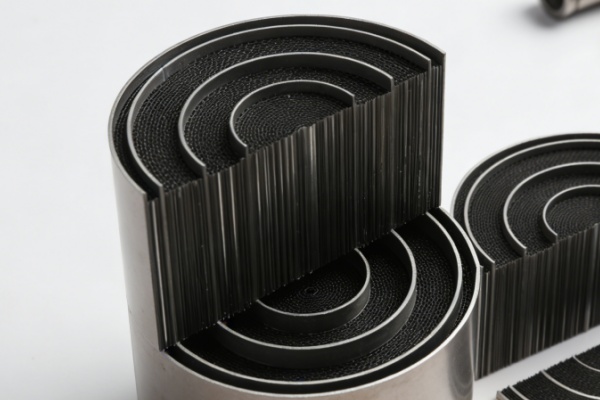
Unlike the common round or square structures, a racetrack metal substrate has an oval-style shape—similar to a running track. That shape isn’t just for looks. It’s usually chosen to match the geometry of certain exhaust housings where a standard round substrate simply doesn’t fit well.
Exhaust systems often have limited space inside the housing. A racetrack structure allows better use of that space while keeping the gas flow stable.
A few practical advantages engineers usually look for:
Better space utilization – fits into flat or oval exhaust housings without wasting internal volume.
Stable gas flow – the honeycomb channels help keep exhaust flow evenly distributed.
Good thermal behavior – metal substrates heat up quickly, which helps catalytic reactions start sooner.
High durability – suitable for high-temperature environments often found in exhaust systems.
You’ll often see racetrack metal substrates used in:
Automotive exhaust treatment systems
Heavy-duty diesel engines
Industrial emission control equipment
Generator exhaust after-treatment units
In manufacturing, these substrates are often made from thin metal foils. The foils are shaped into a honeycomb structure and then brazed so the structure stays strong and stable.
For companies working on emission control equipment, choosing the right racetrack metal substrate often comes down to a balance between flow performance, thermal durability, and housing design.
It’s a small component, but it plays a pretty important role in keeping modern exhaust systems working efficiently.