To be a valuable global supplier
for metallic honeycombs and turbine parts


Contact number
0555-2813555
To be a valuable global supplier
for metallic honeycombs and turbine parts

Technological Innovation
Process Management
Continuous Improvement
Customer Satisfaction

Knowledge
Dedication
Diligence
Loyalty
Responsibility
Confidence
Tenacity
Respect

To be a valuable global supplier
for metallic honeycombs and turbine parts
Release time:2026-02-10
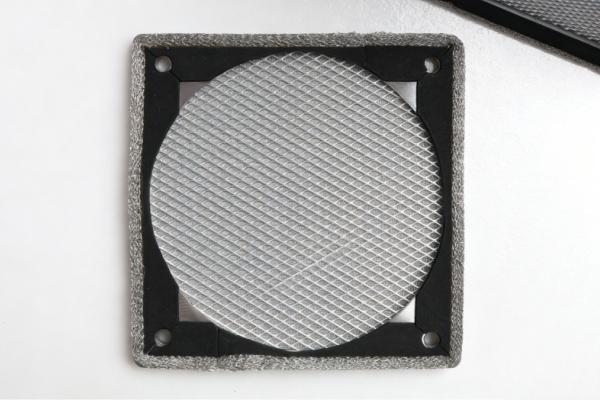
A closed metal enclosure works as a shield. Add ventilation, and the conductive surface is no longer continuous. Heat still needs a path out, so removing the opening is not always an option. In many systems, especially at higher frequencies, the vent becomes the main leakage point. When airflow is required but shielding cannot be weakened, a Planar Waveguide Vent is usually introduced.
Open holes or louvers move air, but they do not control electromagnetic behavior. The problem is not airflow. The problem is the break in the conductive path. As frequency rises, even small gaps begin to radiate or admit energy.
A Planar Waveguide Vent behaves differently. Air passes through narrow conductive channels. Electromagnetic energy entering the channel decays along the channel length. If the channel dimensions stay below cutoff for the frequency range of concern, the opening no longer acts like a direct leakage path. The vent becomes part of the shield rather than a break in it.
Electrical contact matters. The vent frame must remain in good conductive contact with the enclosure. Small gaps, uneven compression, or surface changes can introduce unintended slots. These small details often dominate real shielding performance.
Geometry must stay stable. Channel depth, spacing, and wall thickness affect both airflow and attenuation. If vibration or thermal expansion changes the shape, electromagnetic behavior shifts as well.
ated enclosures see vibration, temperature cycling, and long service time. Contact resistance and structure can drift. Once continuity changes, shielding becomes unpredictable. A stable Planar Waveguide Vent maintains its conductive path and geometry, so airflow and shielding stay consistent.
Shielding is not only about enclosure thickness. Openings define the real behavior. Fully sealing solves leakage but traps heat. Uncontrolled openings release heat but introduce EMI uncertainty. A Planar Waveguide Vent sits between these limits — allowing airflow while keeping the shielding path continuous