To be a valuable global supplier
for metallic honeycombs and turbine parts


Contact number
0555-2813555
To be a valuable global supplier
for metallic honeycombs and turbine parts
Technological Innovation
Process Management
Continuous Improvement
Customer Satisfaction
Knowledge
Dedication
Diligence
Loyalty
Responsibility
Confidence
Tenacity
Respect
To be a valuable global supplier
for metallic honeycombs and turbine parts
Release time:2025-11-28
When I’m on the shop floor looking at DOCs, one thing is clear: metal substrate just take the heat better than ceramics. I’ve seen engines where the exhaust spikes to crazy temps, and the ceramic ones start cracking while the metal ones shrug it off. That’s why we stick to Fe-Cr-Al for heavy-duty jobs. It forms its own oxide layer, so the coating doesn’t flake off, even after thousands of hours.
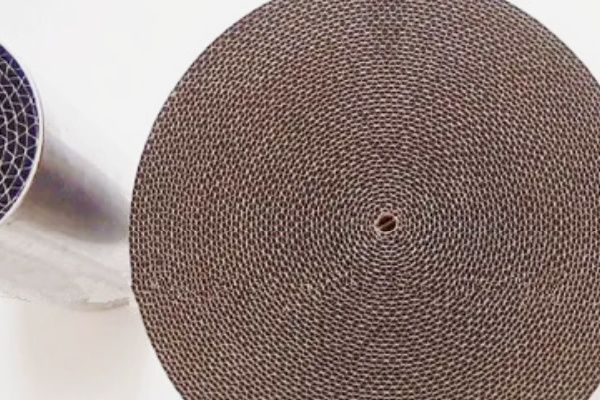
The first thing you notice about metal substrates is how fast they warm up. On a diesel engine, getting the catalyst ready quickly makes a huge difference. The metal heats evenly, so reactions start sooner, and emissions drop faster. Ceramics just can’t keep up—they lag, and you end up with cold-start spikes.
Vibration is another story. Off-road trucks, construction machines—they shake constantly. Thin ceramic walls? They collapse. Metal honeycombs bend a bit but stay intact. Combine that with thermal cycling—start, stop, idle, full load—and you see why metal wins in real-world conditions.
Then there’s the shape and flexibility. We can roll metal into round, oval, even custom shapes. That makes it easy to fit into tight exhaust layouts without compromising strength. Foil thickness and corrugation patterns also matter. Too thin, and it won’t survive vibration; too thick, and it heats slower. It’s a balancing act, but metal gives us options ceramics can’t.
Finally, coating adhesion. Metal’s oxide layer is naturally sticky for washcoat. You get even coverage, less chance of peeling, and stable performance over time. On the floor, that’s what keeps the engine compliant and avoids downtime for repairs.
In short, if you’re running high-temp oxidation systems, metal substrate just last longer, handle abuse better, and keep the catalyst working. Ceramics have their place, but when the engine is hot, shaking, and running long hours, metal is what we trust