To be a valuable global supplier
for metallic honeycombs and turbine parts


Contact number
0555-2813555
To be a valuable global supplier
for metallic honeycombs and turbine parts
Technological Innovation
Process Management
Continuous Improvement
Customer Satisfaction
Knowledge
Dedication
Diligence
Loyalty
Responsibility
Confidence
Tenacity
Respect
To be a valuable global supplier
for metallic honeycombs and turbine parts
Release time:2025-10-28
In many factories today, the control of exhaust emissions is no longer just a compliance issue — it has become part of how plants operate efficiently and responsibly. Among the different technologies used for waste gas purification, oxidation catalyst systems remain one of the most reliable methods. Within these systems, square metal substrate play a quiet but important role in helping reactions take place more effectively.
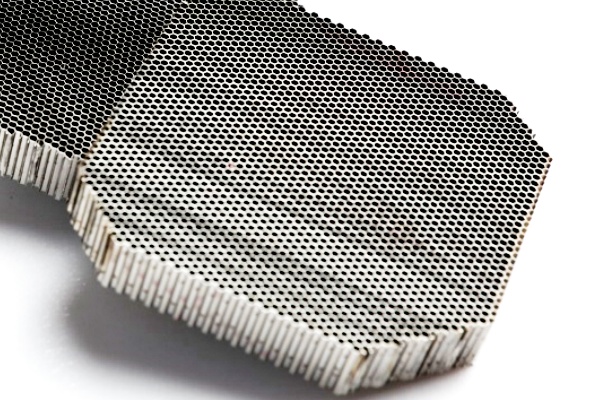
A metal substrate acts as the carrier for the catalytic coating that drives the oxidation process. When exhaust gases containing carbon monoxide, hydrocarbons, or VOCs pass through the system, the catalyst converts them into carbon dioxide and water. The choice of a square metal substrate gives a few practical benefits. Its geometry allows air to move more evenly through the catalyst bed, reducing dead zones and pressure drops. For many engineers, this design makes it easier to integrate the catalyst into compact industrial systems where space is limited.
Durability is another reason metal substrate oxidation catalysts are widely used in industrial operations. High temperatures, chemical exposure, and constant vibration can easily damage fragile materials. Metal substrates, usually made from heat-resistant alloys, handle these conditions well. They expand and cool without cracking, and their smooth surface provides a stable base for the catalytic coating. Over time, this translates into a longer service life and lower maintenance effort.
In waste gas treatment and VOC control systems, square metal substrates have become common in coating plants, chemical workshops, and energy facilities. Their fast heat conduction means the catalyst reaches the required reaction temperature quickly, cutting down on warm-up energy. For plants that operate continuously, this can save a noticeable amount of fuel and shorten recovery time after shutdowns.
The efficiency of these systems is not only about performance but also about sustainability. Compared with traditional ceramic carriers, metal substrate oxidation catalysts are lighter, easier to recycle, and less fragile. Their extended lifetime reduces replacement frequency, which in turn lowers material consumption. In large-scale operations where every shutdown counts, such small details can make a clear economic difference.
Another feature engineers appreciate is modularity. square metal substrate can be combined into larger units or replaced individually when needed. This flexibility simplifies inspection and replacement work, especially in oxidation reactors that run around the clock. Many factories have gradually switched to this design because it balances stability, cost, and adaptability.
As environmental standards continue to tighten, oxidation catalyst systems built with square metal substrates will likely remain central to industrial air management. Their performance has been proven in different sectors — from manufacturing lines to gas turbines — where both reliability and efficiency matter. While the technology itself is well understood, its quiet contribution to cleaner industrial processes often goes unnoticed.
For modern facilities aiming to reduce emissions and energy waste, metal substrate oxidation catalysts offer a straightforward path forward. Strong, compact, and consistent in performance, the square metal substrate stands as one of the more practical tools for industries moving toward a cleaner and more efficient future.