To be a valuable global supplier
for metallic honeycombs and turbine parts


Contact number
0555-2813555
To be a valuable global supplier
for metallic honeycombs and turbine parts

Technological Innovation
Process Management
Continuous Improvement
Customer Satisfaction

Knowledge
Dedication
Diligence
Loyalty
Responsibility
Confidence
Tenacity
Respect

To be a valuable global supplier
for metallic honeycombs and turbine parts
Release time:2025-10-29
In high-frequency transmission systems, the waveguide window is often one of those components that doesn’t attract much attention until something goes wrong. Its job seems simple — letting the RF energy pass through while keeping the air or vacuum on each side separated — but the design behind it involves careful balance between electrical and mechanical factors.
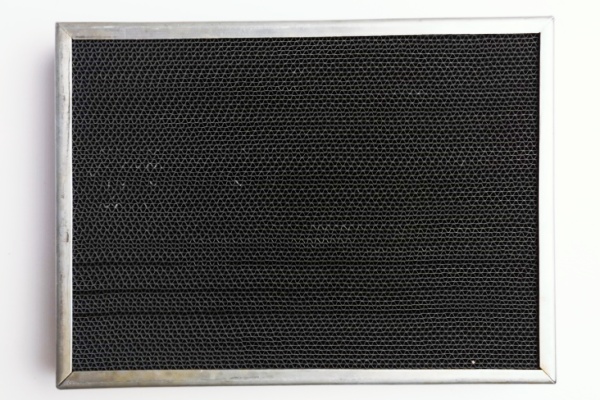
A standard waveguide window uses a dielectric sheet, fixed inside a metal housing. The key is matching the impedance between the dielectric and the waveguide wall. If the thickness or dielectric constant is off, even slightly, reflection increases, power efficiency drops, and local heating starts to appear. Many designers rely on quarter-wave matching principles, adjusting the dielectric thickness until reflection at the target frequency is minimized.
Beyond electromagnetic behavior, temperature and stress are constant concerns. When a window runs under high power, small mismatches can generate heat at the interface. Materials with stable dielectric properties and low loss tangent are usually selected to handle this. The frame must also provide enough thermal conduction to prevent cracks in long-term use.
From a mechanical perspective, the assembly process affects performance more than most expect. A minor gap or uneven bonding surface can shift the frequency response or create unwanted standing waves. Careful polishing, uniform brazing, and pressure testing are standard steps in production before a unit is cleared for use.
In practical terms, a good waveguide window is the result of both accurate calculation and hands-on testing. Every installation has its own conditions — frequency range, pressure difference, environmental vibration — and a design that works in one setup might not behave the same in another. Engineers tend to refine dimensions, verify matching with network analyzers, and observe thermal stability under full load before finalizing a design.
Reliable waveguide window rarely stand out, but they hold systems together. A small flaw can cause reflection spikes or even vacuum leaks, while a well-designed one keeps the signal path clean for years of service.