To be a valuable global supplier
for metallic honeycombs and turbine parts


Contact number
0555-2813555
To be a valuable global supplier
for metallic honeycombs and turbine parts
Technological Innovation
Process Management
Continuous Improvement
Customer Satisfaction
Knowledge
Dedication
Diligence
Loyalty
Responsibility
Confidence
Tenacity
Respect

To be a valuable global supplier
for metallic honeycombs and turbine parts
Release time:2026-10-23
Stainless steel honeycomb core is a metallic cellular structure combining high structural efficiency, dimensional stability, corrosion resistance and elevated-temperature capability.
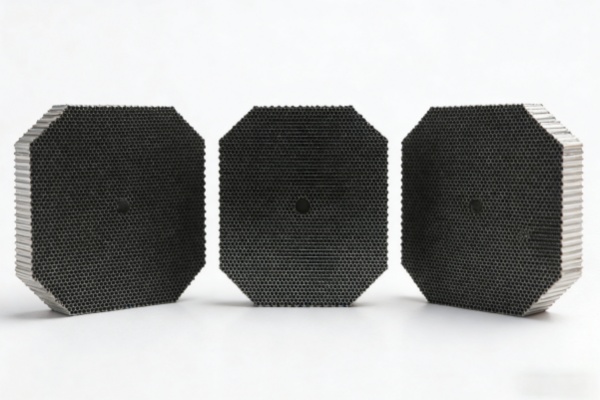
Compared with aluminum honeycomb, stainless steel honeycomb is often selected when an application involves higher temperatures, vibration, corrosive environments or metallic joining processes such as welding and brazing.
Its performance depends not only on the stainless steel grade, but also on cell size, foil thickness, core depth, joining method, dimensional accuracy and operating conditions.
Typical applications include aerospace structures, turbine sealing systems, wind-tunnel flow straighteners, acoustic systems and specialized industrial equipment.
| Question | Engineering Answer |
|---|---|
| Why use stainless steel honeycomb? | It combines rigidity, corrosion resistance, elevated-temperature capability and compatibility with metallic joining processes. |
| What determines its performance? | Material grade, cell size, foil thickness, core depth, joining method and dimensional accuracy. |
| Where is it used? | Aerospace structures, turbine sealing, flow conditioning, acoustic systems and industrial equipment. |
| Which processes may be involved? | Forming, welding, brazing, heat treatment, inspection and specialized machining. |
Honeycomb performance is determined by both cellular geometry and foil material properties. Austenitic stainless steels such as 304 and 316L are widely used in industrial fabrication because of their corrosion resistance, formability and weldability.
These characteristics are important in honeycomb manufacturing because thin metallic foil must be formed into a repeatable geometry and joined consistently across many contact points.
For elevated-temperature applications, however, there is no single universal operating-temperature limit for stainless steel honeycomb. Actual capability depends on factors such as:
alloy grade and condition
mechanical loading
exposure time
operating atmosphere
foil thickness
joining process
| Engineering Feature | Engineering Benefit |
|---|---|
| High stiffness-to-weight efficiency | Cellular geometry provides rigidity while reducing material usage. |
| Elevated-temperature capability | Better suited than aluminum honeycomb for many higher-temperature applications. |
| Corrosion resistance | Appropriate stainless grades perform well in many industrial environments. |
| Weldable and brazable | Compatible with a variety of metallic joining processes. |
| Flow-conditioning capability | Regular cells can reduce lateral flow components and help straighten airflow. |
| Customizable geometry | Cell size, foil thickness and depth can be tailored to application requirements. |
| Industrial durability | Suitable for demanding environments when properly designed and manufactured. |
Metallic honeycomb has a long engineering history in elevated-temperature aerospace structures.
SAE Technical Paper 630391 describes a brazed stainless steel honeycomb structure used in the C-141 aircraft tailpipe, operating at approximately 1000°F (538°C). The honeycomb configuration allowed engineers to reduce structural weight while maintaining the required performance.
SAE Technical Paper 620374 also describes brazed and heat-treated steel honeycomb panels developed for the B-70/XB-70 structural concept for sustained high-speed operation.
These references do not establish one universal temperature limit for every stainless steel honeycomb product. Instead, they show that properly designed metallic honeycomb structures have been used where low weight, structural performance and elevated-temperature capability are required.
A typical manufacturing process begins with thin metallic foil. The foil is formed into a controlled corrugated profile. Multiple formed layers are then positioned so that the corrugations create a regular cellular structure.
The contact points between adjacent foil layers are subsequently joined using an appropriate welding or brazing process. Key manufacturing considerations include cell consistency, forming accuracy, joint integrity, dimensional tolerance and process repeatability.
For brazed components, factors such as joint preparation, brazing cycle, temperature control and post-process inspection must also be carefully controlled. The manufacturing route therefore depends on the alloy, geometry, drawing requirements and intended service environment.
| Parameter | Specification |
|---|---|
| Cell Size | 0.4 mm – 38 mm, customizable |
| Foil / Strip Thickness | 0.03 mm – 0.25 mm, customizable |
| Core Thickness | 1.6 mm – 750 mm, customizable |
| Material Grade | Stainless steel and other application-specific metallic materials |
| Joining Method | Welding, brazing, or other qualified processes according to application requirements |
| Supply Form | Panels, blocks, rings, or customer-specific components |
The ranges above reflect MAT Aviation’s typical processing capability. Custom dimensions can be evaluated according to customer drawings, material requirements and application conditions. For aerospace and turbine applications, final parameters are controlled by customer drawings, process specifications and inspection requirements.
Honeycomb structures are widely used for flow straightening and turbulence management. NASA wind-tunnel research identifies honeycomb flow straighteners, turbulence-reduction screens and other flow-conditioning devices as important elements for improving wind-tunnel flow quality.
NASA Langley research also showed that relatively minor physical damage to a honeycomb structure can reduce its effectiveness in turbulence reduction. This is an important engineering point: cell integrity and dimensional consistency are functional requirements, not merely cosmetic quality characteristics.
Another NASA study compared screens, honeycomb and combined arrangements and showed that honeycomb can be particularly effective in reducing lateral turbulence components.
For flow-conditioning applications, important parameters typically include:
cell size
cell depth
cell-length-to-cell-size ratio
foil thickness
open area
straightness
pressure drop
incoming flow conditions
The correct geometry therefore depends on the specific wind tunnel or airflow system.
| Engineering Requirement | Aluminum Honeycomb | Stainless Steel Honeycomb |
|---|---|---|
| Minimum weight | Strong advantage | Higher density |
| Elevated temperature | More limited | Generally better suited |
| Corrosion resistance | Depends on alloy and environment | Good with appropriate grade |
| Welding / brazing integration | Process dependent | Suitable for many metallic joining processes |
| Structural rigidity | Good | High |
| Harsh industrial environment | Application dependent | Frequently selected |
| Flow-conditioning systems | Widely used | Useful where durability or environment requires stainless steel |
Aluminum remains attractive where minimum weight is the primary objective. Stainless steel becomes more relevant when temperature capability, corrosion resistance, structural durability or compatibility with welding and brazing becomes more important.
Gas turbine and aero-engine honeycomb sealing systems
Wind-tunnel flow straighteners and airflow-conditioning structures
Aerospace metallic honeycomb structures
Industrial acoustic and noise-control systems
Exhaust-related metallic structures
High-temperature support and shielding structures
Specialized flow-management systems
In turbine sealing systems, honeycomb can form part of a stationary sealing structure located close to a rotating component. In flow-conditioning systems, the engineering focus shifts toward cell geometry, core depth, straightness and pressure-drop characteristics.
Cell size alone is normally not enough to define a metallic honeycomb component. A practical engineering specification may include material grade, cell size, foil thickness, core depth, overall dimensions, joining method, dimensional tolerances, operating temperature, environmental conditions and final application.
For aerospace and turbine components, customer drawings may also specify inspection, traceability and special-process requirements.
MAT Aviation has extensive experience in metallic honeycomb manufacturing, supporting aerospace, turbine sealing, airflow-management and other demanding industrial applications.
The company operates under an AS9100 aerospace quality management system and maintains multiple NADCAP-accredited special processes, including:
Vacuum Brazing
Heat Treating
Non-Destructive Testing (NDT)
Nonconventional Machining
Welding
These capabilities support multiple stages of metallic honeycomb and aerospace-component manufacturing, including forming, joining, thermal processing, inspection and specialized machining.
Manufacturing control can include:
material traceability
foil forming consistency
cell geometry
joining quality
dimensional inspection
process repeatability
Components can be manufactured according to customer drawings, material specifications, dimensional tolerances and applicable process requirements. For custom projects, customers can provide drawings, operating conditions and target specifications for engineering evaluation.
SAE Technical Paper 630391 — An Application of Brazed Stainless Steel Honeycomb for Moderately High Temperature Structures
https://saemobilus.sae.org/papers/application-brazed-stainless-steel-honeycomb-moderately-high-temperature-structures-630391
SAE Technical Paper 620374 — The B-70's New Structural Design Concepts for Mach 3 Temperatures
https://saemobilus.sae.org/papers/b-70s-new-structural-design-concepts-mach-3-temperatures-620374
NASA TM-105417 / AIAA 92-3916 — Flow Quality Studies of the NASA Lewis Research Center 8- by 6-Foot Supersonic / 9- by 15-Foot Low-Speed Wind Tunnel
https://ntrs.nasa.gov/citations/19920019430
NASA TM-81868 — Considerations for the Installation of Honeycomb and Screens to Reduce Wind-Tunnel Turbulence
https://ntrs.nasa.gov/citations/19810020599