To be a valuable global supplier
for metallic honeycombs and turbine parts


Contact number
0555-2813555
To be a valuable global supplier
for metallic honeycombs and turbine parts
Technological Innovation
Process Management
Continuous Improvement
Customer Satisfaction
Knowledge
Dedication
Diligence
Loyalty
Responsibility
Confidence
Tenacity
Respect

To be a valuable global supplier
for metallic honeycombs and turbine parts
Release time:2026-07-17
Most people think a metal substrate is just a metal substrate. Same honeycomb, same cells, same coating. Shape doesn't matter, right?
Wrong.
Round, oval, racetrack – the shape changes how exhaust flows, how much backpressure the engine sees, whether the converter fits under the car, and how long it lasts.
We make all three in our shop. Here's what actually changes.
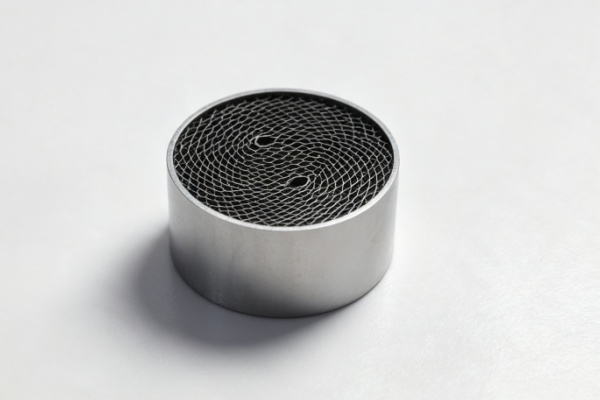
Round – The Flow King
Round is what most people picture when they think catalytic converter. Symmetrical. Exhaust hits the face and spreads evenly. No corners, no dead zones.
That even flow distribution is round's biggest advantage. Every cell does about the same amount of work. No hot spots, no cold spots. Good catalyst utilization.
But there's a catch. Round has a smaller cross-section for a given volume, so pressure drop is higher. The engine has to push harder to get exhaust through. More backpressure means less power, worse fuel economy.
Round also needs less catalyst volume to get the same conversion as an oval of the same outer size. Better flow distribution means you can get away with less volume. Lower cost, less weight. But that pressure drop penalty is real.
Oval and Racetrack – The Packaging Kings
Oval and racetrack shapes exist for one reason – space. Under a car, there's often a flat spot where a round converter won't fit. Oval and racetrack squeeze into those tight spaces.
The trade-off is flow distribution. Oval is much harder to get uniform flow. Exhaust hits the face and tends to bunch up in the middle or favor one side. Some cells work hard, others sit idle.
That's why inlet cone design matters so much for oval converters. You have to carefully shape the cone to spread gas evenly across that oblong face. A badly designed oval converter can have hot spots that melt the substrate and cold spots that don't convert.
Racetrack – basically a rectangle with rounded ends – is even trickier. The flat sides create more flow maldistribution. The corners can be dead zones. The center gets overloaded.
What the Data Says
A 1996 SAE paper from Toyota and NGK compared round and oval directly. Key finding: a 1290 cm³ round thin‑wall converter had the same pressure drop and catalytic performance as a 1650 cm³ oval converter.
That's a 360 cm³ difference. Round did the same job with 22% less catalyst volume. Same performance, less material, lower cost.
But oval fit where round wouldn't. Sometimes packaging is the priority, not volume efficiency. You take the hit on volume because the shape is what fits.
The same paper also found that round thin‑wall substrate had better thermal shock resistance than oval. Oval creates stress points that round doesn't have.
Manufacturing – Round Is Easier
Round metal substrates are wound. Corrugated and flat foil strips wound around a mandrel like rolling up a sleeping bag. Simple. Repeatable. Fast.
Oval and racetrack are harder. They need a special flat mandrel. The foil wraps around a rectangular core, and the corners create stress points. Getting the foil to lay flat without wrinkles or gaps takes more skill.
We've made both. Round is quicker. Oval takes more setup time. Racetrack even more.
Real World Use
Oval substrates are widely used in diesel oxidation catalysts because of packaging constraints. Engine bays and underbodies are tight. Round won't fit. So they use oval and live with the flow challenges.
But those challenges are real. Flow uniformity is much harder to achieve in oval substrates. Engineers spend a lot of time optimizing the inlet cone to get the gas spread evenly.
Same exhaust flow, same cell density, same coating – shape changes everything. And most of the time, the shape is chosen by the chassis guy, not the emissions guy.
No Right or Wrong – Just What Fits
Round flows better. Oval fits better. No clear winner – depends on what you're building.
If you have space, go round. Better flow distribution, better volume efficiency, better thermal shock resistance. Higher pressure drop, but you can offset that with thin‑wall technology.
If space is tight, oval or racetrack is the only option. Just know you're trading flow uniformity for packaging. More time on inlet cone design. Maybe more volume to get the same conversion.
Both use the same honeycomb. Same cells, same coating, same precious metals. The difference is the shape – and shape determines flow, backpressure, and whether it fits.
We make all three. We'll tell you which one fits your application – not which one we want to sell.
That's what we do.