To be a valuable global supplier
for metallic honeycombs and turbine parts


Contact number
0555-2813555
To be a valuable global supplier
for metallic honeycombs and turbine parts
Technological Innovation
Process Management
Continuous Improvement
Customer Satisfaction
Knowledge
Dedication
Diligence
Loyalty
Responsibility
Confidence
Tenacity
Respect

To be a valuable global supplier
for metallic honeycombs and turbine parts
Release time:2026-07-15
Some cabinets live in air‑conditioned rooms. Some sit next to furnaces. When the ambient temp hits 60, 80, 100°C, standard vents don't last.
Aluminum honeycomb softens and sags. Foam gaskets harden and crack. Shielding drops. Gear fails.
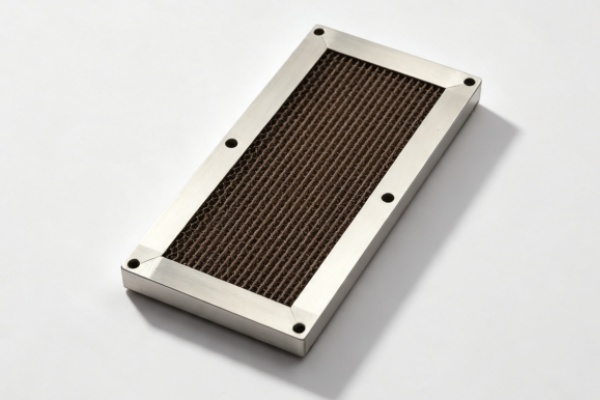
We build high temp EMI vents for places that cook normal ones. Here's what that actually looks like.
What Heat Does
Aluminum is fine up to about 200°C. Past that, it softens. Cells sag. Frame warps. Once the honeycomb distorts, the waveguide effect is gone. Shielding goes with it.
Gaskets go even sooner. Foam starts breaking down around 70-80°C. Hardens, takes a set, cracks. Once that happens, RF leaks around the edge.
So if your cabinet runs hot, you can't use standard parts. Plain and simple.
Material – Stainless, Not Aluminum
If the cabinet is in a hot spot, aluminum is wrong. It softens, warps, and corrodes faster at high temps.
We use stainless. 304 for most. 316L if there's corrosion too – chemical plants, coastal, wet heat.
Stainless doesn't soften where aluminum dies. Vacuum brazed stainless vents handle up to 700°C. That's way beyond what any cabinet will ever see.
Brazing – Glue Won't Hold
Some cheap vents use adhesive to bond layers. Heat softens the glue. Layers delaminate. Vent falls apart.
We use vacuum brazing. The metal fuses together – no glue, no adhesive. The bond doesn't soften when things get hot.
Gasket – Foam Dies
Foam gaskets harden and crack in heat. Once they fail, RF leaks around the edge.
For high temp, we use silicone or fluorosilicone. They stay flexible at temps that kill foam. Some are rated up to 200°C continuous.
Knitted wire mesh is even better for extreme heat – no rubber to degrade. Beryllium copper fingers are the toughest option. They don't degrade and keep contact force consistent.
Airflow – Don't Choke Fans
High heat means you need airflow. If the vent restricts too much, fans can't move enough air. Cabinet overheats.
Good high‑temp vent has 80-90% open area. Straight cells create laminar flow with low pressure drop.
We size vents based on heat load and fan capacity. Too restrictive? Go bigger or add more vents.
What to Look For
Stainless. Vacuum brazed. Silicone or wire mesh gasket. Cell size matched to frequency. 1/2‑inch depth. 80%+ open area. Frame thick enough to stay flat under thermal cycling.
Don't use aluminum. Don't use foam. Don't use glued construction.
Real Example – Furnace Cabinet
Cabinet 10 feet from a heat‑treat furnace. Ambient 70°C. Standard aluminum vents warped in six months. VFDs started throwing errors.
Replaced with stainless, vacuum brazed, 1/8‑inch cells, 1/2‑inch depth, silicone gaskets. Same size, same airflow. Two years later, still straight.
Real Example – Steel Mill
Control cabinets in a hot strip mill. Temp swings, vibration, conductive dust. Standard vents didn't last a year.
Used 316L stainless, beryllium copper finger gaskets, and a pre‑filter for dust. Three years later, still in service.
Installation in High Heat
Thermal cycling expands and contracts the frame and cabinet. If the vent isn't mounted right, it warps or loosens.
Clean the surface – bare metal, no paint. Torque to spec – too loose gaps, too tight warps. Screws every 50 mm or less – too far apart, gasket lifts in the middle. Use stainless hardware – plated steel rusts.
Maintenance
High heat is hard on everything.
Check the gasket – hard, cracked, or flat? Replace it.
Look for warping – shine a light through. Uneven pattern means cells have distorted.
Check screws – thermal cycling loosens them.
Clean the vent – dust holds heat.
Bottom Line
If your cabinet runs hot, standard vents die. Aluminum sags. Glue fails. Foam rots.
High temp EMI vents need stainless, vacuum brazing, silicone or wire mesh gaskets, and 85%+ open area.
Aluminum and foam won't last. Cheap vents will cost you in downtime.
We build them for furnaces, steel mills, foundries, ovens. If your cabinet lives in heat, talk to us.