To be a valuable global supplier
for metallic honeycombs and turbine parts


Contact number
0555-2813555
To be a valuable global supplier
for metallic honeycombs and turbine parts
Technological Innovation
Process Management
Continuous Improvement
Customer Satisfaction
Knowledge
Dedication
Diligence
Loyalty
Responsibility
Confidence
Tenacity
Respect

To be a valuable global supplier
for metallic honeycombs and turbine parts
Release time:2026-04-11
A car might get driven an hour a day. An industrial engine might run for a month straight. Shut it down for a weekend, then fire it up again Monday morning.
The substrate has to survive that. And the exhaust isn't always clean. Sometimes it's nasty – dirty fuel, high sulfur, oil carryover. You can't just spec a standard automotive part and hope.
Over the years, we've learned what quality control means for industrial applications. It's not the same as cars. The standards are different. The tests are harder. And the consequences of failure are bigger – nobody wants to shut down a production line to swap a converter.
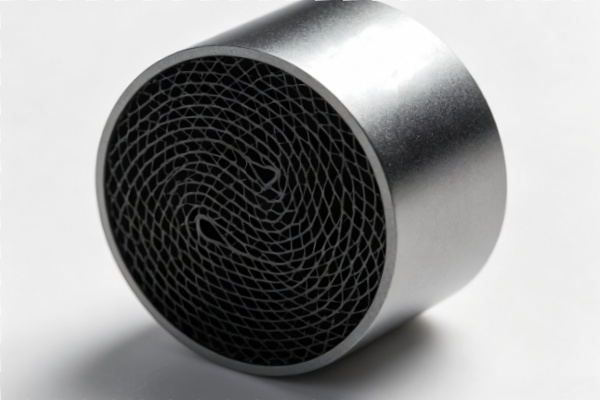
The Foil Has to Be Right – No Exceptions
Industrial substrates see more heat cycles and more vibration than most cars. The foil has to handle it.
We use stainless steel for industrial stuff. Almost always. Aluminum is fine for a passenger car that lives in a garage. But an industrial engine? It might be outside in the weather. Salt air. Acidic exhaust. Aluminum won't last.
The foil thickness is critical too. Too thin and it distorts under high heat. Too thick and the substrate takes forever to light off. We hold tolerances to a few microns. Every coil gets checked before it goes on the line.
We also test the foil's surface. Any oil, any oxidation, and the brazing won't stick. We run a test braze on a sample from every coil. If it doesn't bond solid, the whole coil goes back.
I remember a job a few years back – a generator manufacturer needed substrates that could handle 700 degrees continuous. We went through three different foil suppliers before we found one that held up. The first two had inconsistent surface finish. The braze looked fine on the lab samples but failed in production. Cost us two months of headaches.
Forming Has to Be Repeatable, Batch After Batch
Industrial customers don't buy one substrate at a time. They buy pallets. Fifty. A hundred. Two hundred. They expect every single one to be the same.
That means the forming tools have to be perfect. We check cell dimensions every hour. We have go/no-go gauges for cell size. If the gauge doesn't fit right, we stop the line and change the rolls.
We also check cell straightness. Industrial exhaust can carry particulates. If the cells are crooked, soot builds up in the corners and plugs the substrate. We shine a light through a sample from every batch. If the light pattern is uneven, the batch gets reworked.
I've seen industrial converters fail after six months because the cells were misaligned by just a few degrees. The customer thought the substrate was bad. The real problem was the forming. We replaced the rolls and the next batch ran for three years.
Brazing Has to Survive Thermal Cycling
An industrial engine might start and stop every day. Or it might run for a month, then sit for a week. The substrate sees hundreds of heat cycles over its life.
Standard brazing filler might hold up for a car. But industrial? We use high-temperature filler with a wider melting range. It's more forgiving when the temperature swings.
Every batch gets a peel test. We take a sample substrate and literally peel the layers apart. If the foil tears before the brazed joint gives, it's good. If the joint comes apart clean, it's bad. No gray area.
We also run thermal cycle tests on new designs. Heat the substrate to 600 degrees, cool it to room temperature, repeat. A hundred cycles. Two hundred. We measure backpressure before and after. If it changes, the brazing isn't stable.
One of our industrial customers had a problem with substrates cracking after about 18 months. We cut one open and saw that the brazing had fatigued – small cracks at the corners of the cells. We switched to a different filler alloy and the problem went away. That's the kind of thing you only catch if you're looking for it.
Dimensional Tolerances Are Tighter
An industrial can isn't always round. Sometimes it's oval. Sometimes it's a rectangle. The substrate has to fit exactly. Not close. Exactly.
We hold diameter tolerances to +/- 0.5 mm. Length to +/- 1 mm. Ovality – how out-of-round it can be – to 0.3 mm. If the substrate is too big, it won't go in the can. Too small, it rattles and breaks.
We measure every substrate. Not samples. Every one. We have fixtures with dial indicators. The operator checks diameter at three points, length at two ends. If it's out of spec, it gets pulled.
I had a customer once reject an entire pallet because the substrates were 0.2 mm oversize. I thought they were being unreasonable. Then I visited their assembly line. Their cans were welded to tight tolerances. 0.2 mm meant the substrate wouldn't slide in without force. And force cracked the mounting mat. So yeah, they were right. Now we hold tighter tolerances than the spec calls for.
Coating Consistency for Industrial Duty
Industrial exhaust isn't as clean as automotive exhaust. There can be sulfur. There can be oil ash. There can be unburned fuel. The washcoat and precious metals have to tolerate that.
We use a washcoat formulation that's more resistant to poisoning. It's a different recipe than automotive – higher porosity, thicker layer. It takes longer to dry and fire.
The precious metal loading is higher too. Industrial catalysts need to stay active longer because the engine runs more hours. More platinum, more palladium, more rhodium.
We test coating loading by weighing every substrate before and after. The target weight is tight. If it's off by more than a few grams, the batch gets recoated or scrapped.
We also run performance tests on samples – flow a synthetic exhaust gas through the substrate and measure conversion efficiency. For industrial, we test at multiple temperatures – low, medium, high. The catalyst has to work across the whole range.
Traceability Is Not Optional
When an industrial customer calls with a problem, they need answers fast. Which batch? Which coil of foil? Which furnace run?
We keep records on everything. Every substrate has a laser-etched code. We can trace it back to the day it was made, the operator who stacked it, the furnace profile, the coating batch.
I've had customers send us failed substrates from the field. We look up the code, pull the production records, and figure out what went wrong. Sometimes it's our fault – a furnace drift we didn't catch. Sometimes it's the customer's – bad fuel, overheating, something else. Either way, we can tell them.
Without traceability, you're guessing. And guessing doesn't help when a generator is down and the plant manager is yelling.
Testing Beyond the Standard
We do extra testing for industrial substrates. Stuff we don't bother with for automotive.
Thermal shock testing. Heat the substrate to 700 degrees, then blast it with room-temperature air. Look for cracks.
Vibration testing. Mount the substrate in a can, put it on a shaker table, run it at engine frequencies for hours. Check for loose substrate or cracks.
Corrosion testing. Salt spray. Acid exposure. Industrial engines don't always run on clean fuel. The substrate has to survive.
Pressure drop testing at temperature. Backpressure changes when the metal expands. We test at room temperature and at operating temperature. The difference has to be within a range.
We don't do these tests on every batch – they're too time-consuming. But we do them on every new design and every time we change a process. And we keep the records.
What Industrial Customers Actually Care About
I've talked to enough plant engineers and maintenance supervisors to know what they want.
Reliability. They don't want to shut down for a converter failure. Every hour of downtime costs money.
Predictability. They want to know when the substrate will need replacement. Not "sometime." A realistic service life.
Traceability. They keep their own records. They expect us to keep ours.
Support. When something goes wrong, they want a real person on the phone who knows what they're talking about. Not a ticket system.
We've had customers stay with us for years because we answer the phone. That sounds simple. You'd be surprised how many suppliers don't.
Industrial catalytic converter substrates aren't car parts. They see more hours, hotter conditions, and dirtier exhaust. The quality standards have to be tighter.
Good foil. Precise forming. Solid brazing. Tight dimensions. Consistent coating. Full traceability. Extra testing.
We do all of that because we've seen what happens when we don't. Failed substrates. Angry customers. Lost business.
It takes more time. It costs more money. But it's the only way to make a substrate that lasts for years in an industrial environment. And that's what our customers pay for – not just a part, but the confidence that it won't let them down.