To be a valuable global supplier
for metallic honeycombs and turbine parts


Contact number
0555-2813555
To be a valuable global supplier
for metallic honeycombs and turbine parts
Technological Innovation
Process Management
Continuous Improvement
Customer Satisfaction
Knowledge
Dedication
Diligence
Loyalty
Responsibility
Confidence
Tenacity
Respect

To be a valuable global supplier
for metallic honeycombs and turbine parts
Release time:2026-03-24
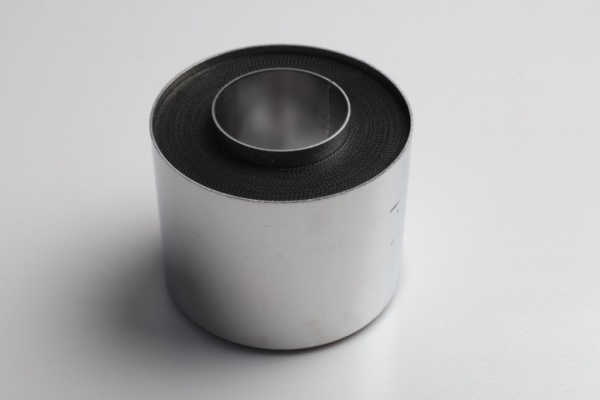
Most catalytic substrate are round. 4 inches, 6 inches, maybe a little bigger or smaller. 400 cells per square inch. Aluminum foil. That covers about 80% of what's out there.
But the other 20%? That's where things get interesting. And complicated.
I've spent enough time in this business to know that custom substrates aren't just a smaller run of the standard part. They're a different animal altogether. If you need something that doesn't come off the shelf, here's what you need to know.
Why Custom Happens
The reasons are all over the place.
Sometimes it's packaging. The engine bay is tight. A round can won't fit, but an oval or a D-shape will. I've seen substrates shaped to wrap around transmission housings, tuck under frame rails, fit into spaces that weren't designed for a converter in the first place.
Sometimes it's flow. A diesel engine needs a certain face area to keep backpressure low. If the standard round size doesn't give you enough open area, you go oval or rectangular. More cross-section without adding height.
Sometimes it's the application itself. Marine engines need different corrosion resistance. Generators run at constant load and need different thermal characteristics. Industrial engines in mining equipment see vibration that would tear a standard substrate apart.
And sometimes it's just that the engineer designed something before they thought about the converter. That happens more than anyone wants to admit.
What Changes When You Go Custom
The manufacturing process changes. Sometimes a lot.
Round substrates are easy. The foil gets formed, stacked, rolled into a cylinder, brazed. The tooling is standard. The process is dialed in.
Oval, rectangular, or D-shaped? Now you're talking about custom tooling for the forming equipment. Custom fixtures for stacking. Custom mandrels for holding everything together during brazing. Every shape change ripples through the whole production line.
I remember a job we did for an industrial engine. The customer needed a rectangular substrate, about 8 by 6 inches. Simple rectangle. We thought it would be straightforward. Then we tried to stack it. The corners kept pulling out of alignment because the tension in the foil wasn't uniform across the width. Took us three tries to get the stacking fixture right.
That's the thing with custom shapes. The first few batches are expensive. Not because the material costs more. Because you're paying for all the trial runs, the tooling, the time it takes to figure out what works.
Cell Density and Foil Thickness
Custom doesn't always mean different shape. Sometimes it's different cell density or foil thickness.
Most automotive runs at 400 cpsi with foil around 0.05 mm thick. That's the sweet spot for flow and conversion.
But some applications need something else.
Diesel engines with high soot loads sometimes run lower cell density. 200 or 300 cpsi. Bigger cells, less chance of plugging. The foil might be thicker too, just to hold up to the thermal stress of regeneration cycles.
High-performance gasoline engines sometimes go the other way. 600 cpsi or higher. More surface area for the catalyst. But the cells are smaller, the walls are thinner, and the whole thing is more fragile to handle.
Marine applications often run standard cell density but stainless steel foil instead of aluminum. Same shape. Different material. The manufacturing process is the same, but the brazing temperature changes, the handling changes, the tooling wears differently.
The Tooling Question
If you're ordering custom substrates, ask about tooling.
Some manufacturers will charge you a tooling fee upfront. That covers the cost of designing and building the forming rolls, stacking fixtures, brazing fixtures. The tooling is yours. You pay for it once. Then per-part pricing comes down after that.
Some manufacturers roll the tooling cost into the per-part price. That works if you're only ordering a small quantity. But if you're going to order thousands over time, you're paying that tooling cost over and over. Better to pay it once.
I've seen customers get burned on this. They ordered a custom shape, didn't ask about tooling, got a per-part price that seemed reasonable. Then they came back for a second order and the price was the same. They paid for the tooling again without knowing it.
Lead Times
Custom takes longer. That's just how it is.
Standard round substrates? I can get those out in two weeks if the stock is there.
Custom shape? Six to eight weeks minimum. Maybe longer if there's tooling to build. The first batch is always the slowest. Once the tooling is made and the process is figured out, the next batches move faster.
I've had customers call and say "we need a custom shape in three weeks." Unless the tooling already exists, that's not happening. Plan ahead. The engine designer should be talking to the substrate manufacturer before the final packaging is locked in. Not after.
When It's Worth the Cost
Custom substrates cost more. Sometimes a lot more. So when is it worth it?
When it solves a packaging problem you can't solve any other way. If the only way to fit a converter in the space is to go oval or D-shaped, that's worth the cost. Because the alternative is redesigning the whole engine bay.
When the standard part won't survive the application. If you're putting a converter on a marine engine and aluminum won't last, stainless is worth the extra cost. A failed converter in a boat is expensive to replace.
When volume justifies the tooling. If you're building a thousand engines a year, the tooling cost spread over a thousand parts isn't that much. If you're building ten, the math looks different.
What to Ask the Manufacturer
If you're shopping for custom substrates, here's what to ask.
Have you made this shape before? If they have, the tooling might already exist. That saves time and money.
What's the tooling cost and who owns it? Get this in writing. Know whether you're paying once or paying every time.
What's the lead time on the first batch? Not the quote. The actual lead time. Get a commitment.
What's the minimum order quantity? Some shops won't touch custom shapes for small volumes. The setup time just isn't worth it to them.
Can you do the material we need? Stainless brazing is different from aluminum. Make sure they've done it before.
A Job I Remember
We did a run for a generator manufacturer a few years back. They needed a rectangular substrate, stainless steel, 300 cpsi. Nothing exotic. But their volume was low—maybe 200 a year.
The first few shops they talked to said no. Too much hassle for the volume.
We said yes. Charged them a tooling fee. Set up the forming, the stacking fixture, the brazing process. The first batch took a while to get right. But once we had it dialed in, the next batches were smooth.
That customer is still with us. They pay a fair price. We make a fair margin. Everyone's happy. That's how custom work should go.
Bottom Line
Custom substrates are part of the business. Not every engine fits in a round can. Not every application works with aluminum and 400 cpsi.
If you need something different, find a manufacturer who's done it before. Ask about tooling. Ask about lead times. Be realistic about volume.
It costs more than standard. It takes longer than standard. But when you need a converter that actually fits your engine and actually lasts in your application, custom is worth it.
Just don't wait until the last minute. Tooling takes time. The first batch takes time. And the engine designer who calls two weeks before launch with a custom shape? That conversation never goes well.