To be a valuable global supplier
for metallic honeycombs and turbine parts


Contact number
0555-2813555
To be a valuable global supplier
for metallic honeycombs and turbine parts
Technological Innovation
Process Management
Continuous Improvement
Customer Satisfaction
Knowledge
Dedication
Diligence
Loyalty
Responsibility
Confidence
Tenacity
Respect

To be a valuable global supplier
for metallic honeycombs and turbine parts
Release time:2025-09-04
Let's be honest—metal carriers often get treated like simple pieces of hardware. Engineers spend ages picking the perfect processor or sensor, then just assume any metal bracket will do. But at MAT, as a specialized metal carrier manufacturer, we’ve seen the same design mistakes crop up again and again. These oversights lead to field failures, thermal issues, and last-minute redesigns.
These aren't theoretical problems. They’re real, they’re common, and the good news is, they’re totally avoidable.
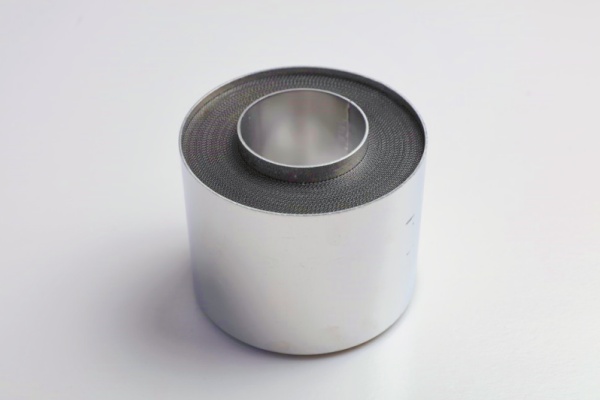
It’s easy to forget that everything expands when it gets hot. When your semiconductor and your metal carrier heat up, they expand at different rates. This CTE (Coefficient of Thermal Expansion) mismatch is a silent killer. It stresses solder joints, cracks ceramics, and slowly tears your assembly apart.
The Fix:
This isn’t a guesswork game. Talk to us at MAT early. As a metal carrier manufacturer focused on honeycomb substrates, we steer you toward material pairs that expand at similar rates, preventing a mechanical tug-of-war inside your product.
Leaving your carrier without the right finish is a recipe for corrosion. It might look fine on your bench, but out in the real world, moisture and contaminants will creep in. Before you know it, you’ve got resistance where you need conduction and a crust where you need a clean surface.
The Fix:
Choose your finish like you choose your components. Does it need to conduct? A plated finish might be the answer. Just need environmental protection? Anodizing could work. At MAT, we help our customers select the right surface treatment based on their application—whether it's for EMI shielding, thermal transfer, or harsh environments.
Sharp internal corners and uneven mounting points are more than just a CAD oversight—they’re stress concentrators. Under vibration or thermal cycling, that’s exactly where a crack will start. Your carrier shouldn’t be a puzzle; it should be a rock-solid foundation.
The Fix:
Use rounded corners. Balance your mounting holes. Think about how force will flow through the part. The engineering team at MAT reviews your designs not just for how to make it, but for how it will perform in the real world. Our experience as a metal honeycomb substrate manufacturer ensures your design is optimized for durability.
In today’s noisy electronic environments, every metal part is part of your EMI strategy. If you don’t intentionally design your carrier for grounding and shielding, it will accidentally work against you. Radiated noise and signal integrity issues are often traced back to a floating metal component.
The Fix:
Plan your grounding from the start. Make sure you have a solid, low-resistance path from the carrier to your system ground. With MAT's expertise in metal honeycomb substrates, we can help you integrate shielding considerations right into the carrier design.
Designing on a screen with perfect alignment is one thing. Accounting for warpage, tolerances, and an assembler’s torque wrench is another. If your carrier isn’t flat, or your mounting scheme bends it, you’ll create an air gap that kills thermal performance.
The Fix:
Specify flatness. Talk about torque specs and tightening sequences. At MAT, we design in features like standoffs or reinforcement to ensure the carrier installs perfectly and stays flat under pressure. Our experience as a metal carrier manufacturer helps us anticipate these manufacturing challenges before they become your problems.
Getting your metal carrier right isn’t about finding a vendor who just cuts metal. It’s about partnering with a specialized metal carrier manufacturer like MAT that understands how honeycomb substrates fit into your entire system. The goal is to ship a reliable product, and that starts with a foundation that’s built right.