To be a valuable global supplier
for metallic honeycombs and turbine parts


Contact number
0555-2813555
To be a valuable global supplier
for metallic honeycombs and turbine parts
Technological Innovation
Process Management
Continuous Improvement
Customer Satisfaction
Knowledge
Dedication
Diligence
Loyalty
Responsibility
Confidence
Tenacity
Respect

To be a valuable global supplier
for metallic honeycombs and turbine parts
Release time:2025-11-24
Choosing the right Honeycomb Metal Monolith Substrate Catalytic Converter Substrate is one of the key steps in ensuring your catalytic system performs reliably under real-world operating conditions. Whether you are building exhaust after-treatment systems for automotive, industrial engines, or specialized equipment, the Catalytic Converter Substrate you select will directly influence conversion efficiency, durability, pressure drop, and long-term stability.
Below is a practical guide based on common engineering considerations and on-site selection experience.
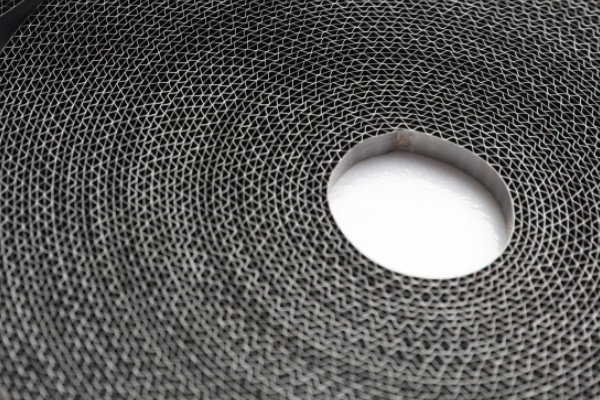
For high-temperature and vibration-intensive environments, a Metal Substrate is generally preferred over ceramic alternatives. Stainless steel foils (often Fe-Cr-Al alloys) offer faster heat-up, better durability, and longer service life.
If your system requires fast light-off performance or frequent thermal cycling, a Metallic catalyst substrate is usually the more reliable choice.
Cell density affects conversion efficiency and back pressure.
Typical ranges include:
100–200 CPSI → Suitable for large engines, lower pressure drop
300–600 CPSI → Better catalytic surface area for light-duty engines
>600 CPSI → High-efficiency applications or hybrid systems
Higher CPSI means better conversion, but also higher flow resistance. Match it with your engine’s exhaust volume and allowable back pressure.
Thinner metal foils (e.g., 0.03–0.05 mm) heat up faster and reduce thermal mass, improving catalyst activation.
Thicker foils improve structural strength, especially for:
Heavy-duty vehicles
Harsh vibration environments
High-flow industrial engines
For many projects, the balance point is a medium-thickness foil that supports durability without compromising performance.
The architecture of the Honeycomb Metal Monolith Substrate can vary:
Spiral-wound structures → lower cost, good overall stability
Corrugated + flat foil combination → higher uniformity & controlled flow channels
Reinforced honeycomb structures → ideal for long-life industrial exhaust systems
Choose a structure that matches your expected mechanical stress and thermal cycle frequency.
The substrate must match your catalytic coating (washcoat) requirements. Key considerations:
Surface roughness
Oxidation resistance
Adhesion between metal substrate and washcoat
Heat treatment stability
Fe-Cr-Al metal substrates with controlled surface oxidation typically provide the most reliable coating adhesion.
If the substrate needs to be welded or installed into a fixed housing, consider a Metal Substrate with Flange.
Flanged designs simplify:
Assembly
Positioning inside the canning
Mechanical stability
Anti-vibration performance
Custom flanges are common in OEM catalytic converters.
Professional manufacturers typically provide:
Thermal shock test results
Vibration and mechanical stability tests
Pressure drop performance curves
Coating adhesion test reports
Request these documents before final selection to ensure long-term reliability.
Selecting the right Honeycomb Metal Monolith Substrate Catalytic Converter Substrate is not just about picking a material—it’s about matching engine conditions, durability requirements, emission standards, and integration needs. A properly chosen Metal Substrate, especially a Metallic catalyst substrate designed for stable coating performance and strong mechanical strength, can significantly extend catalyst life and improve emission control efficiency.