To be a valuable global supplier
for metallic honeycombs and turbine parts


Contact number
0555-2813555
To be a valuable global supplier
for metallic honeycombs and turbine parts
Technological Innovation
Process Management
Continuous Improvement
Customer Satisfaction

Knowledge
Dedication
Diligence
Loyalty
Responsibility
Confidence
Tenacity
Respect

To be a valuable global supplier
for metallic honeycombs and turbine parts
Release time:2025-11-04
When people talk about emission control in diesel engines, the Catalytic Converter is often the first component that comes to mind. Inside it, the metal honeycomb catalyst does most of the heavy lifting. This structure isn’t just a support—it determines how efficiently the converter reacts, how well it handles heat, and how long it lasts.
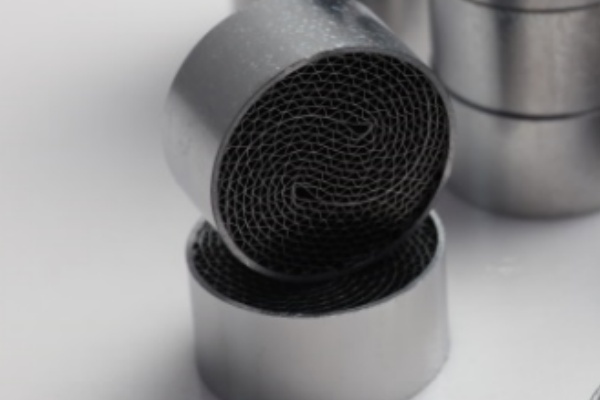
In a typical Diesel Oxidation Catalyst (DOC) setup, exhaust gases pass through a tightly folded metal honeycomb. As the gas moves through the fine channels, carbon monoxide and hydrocarbons are oxidized into less harmful compounds like carbon dioxide and water vapor. Because metal conducts heat well, the Catalytic Converter can reach its active temperature faster, especially right after engine start-up. This quick “light-off” is crucial for meeting strict emission standards.
Compared to ceramic types, metal honeycomb catalysts stand up better to vibration and thermal shock. Diesel engines, particularly in trucks or industrial machinery, generate both. A metal substrate made from Fe-Cr-Al alloy can form a protective oxide layer that helps prevent corrosion even after thousands of heat cycles. That’s one of the reasons why many engineers choose metal-based Catalytic Converters for heavy-duty systems.
The design of the honeycomb also plays a big part. The thin, corrugated layers give a wide surface area for catalytic coating without blocking gas flow. It’s a balance—enough contact for reaction, but not so dense that it adds back pressure to the engine. When done right, the result is smoother performance and better fuel efficiency.
Building such a component isn’t a simple process. The metal foils are rolled, shaped, and joined to form the honeycomb before coating. Every step affects how well the coating sticks and how evenly it reacts under heat. A small flaw during manufacturing can reduce the overall efficiency of the Catalytic Converter, so precision matters.
Metal honeycomb catalysts are now widely used in diesel vehicles, ships, and stationary engines. Their durability and consistent performance make them suitable for long operation hours and tough conditions. As emission regulations keep getting tighter, engineers are refining the metal substrate structure and coating formula to achieve better results with smaller, lighter converters.
In short, the metal honeycomb catalyst is what gives the Catalytic Converter its strength and efficiency. It’s a compact piece of engineering that quietly ensures engines run cleaner and meet the growing environmental standards around the world.