To be a valuable global supplier
for metallic honeycombs and turbine parts


Contact number
0555-2813555
To be a valuable global supplier
for metallic honeycombs and turbine parts
Technological Innovation
Process Management
Continuous Improvement
Customer Satisfaction
Knowledge
Dedication
Diligence
Loyalty
Responsibility
Confidence
Tenacity
Respect

To be a valuable global supplier
for metallic honeycombs and turbine parts
Release time:2025-10-21
When we talk about emission control, most people immediately think of cars. But out in the field — on ships, diggers, or generator sets — the Catalytic Converter faces a whole different kind of challenge. These machines don’t get the luxury of smooth highways or controlled environments. They work long hours, often in heat, dust, and vibration that would easily destroy ordinary setups.
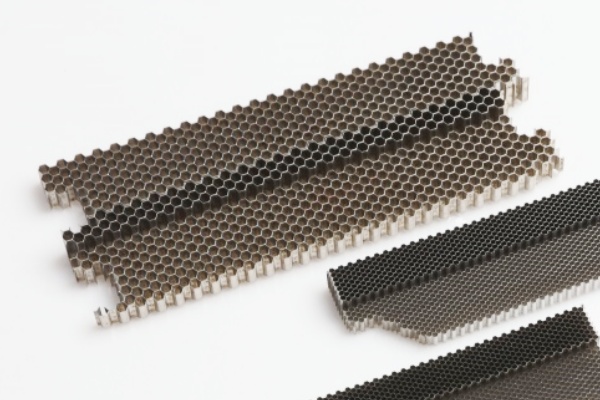
Take marine engines as an example. They run at steady loads for hours, sometimes days, which means exhaust gases stay hot and heavy. The Catalytic Converter here needs not only to handle that constant heat but also to resist corrosion from salt air. A metal substrate works better than ceramic because it can flex a little without cracking, and it transfers heat faster, helping the catalyst reach its working temperature quickly.
Off-road machines, on the other hand, face a completely different kind of stress. Constant vibration, wide load changes, and dirt in the air — all of that puts pressure on the exhaust system. If the Catalytic Converter isn’t well-designed, you’ll end up with clogging or uneven flow that cuts efficiency fast. That’s why most of these setups go for a sturdier housing and a flow-friendly honeycomb structure, balancing strength with gas distribution.
Power generators take things to another level. Many of them run non-stop for days, and that heat cycling can be brutal. You’ll see discoloration, metal fatigue, even catalyst washout if the design doesn’t allow for proper expansion. Using a Catalytic Converter with a high-grade metal substrate helps avoid those issues. It holds shape, tolerates repeated heating, and keeps the active coating stable over time.
In short, every environment tells you something new about what a Catalytic Converter really needs to survive. It’s not just about chemistry — it’s about structure, airflow, and materials that can take real-world punishment. Once you’ve seen a few of these units torn down after a year in the field, you start to appreciate that balance between durability and efficiency.