To be a valuable global supplier
for metallic honeycombs and turbine parts


Contact number
0555-2813555

To be a valuable global supplier
for metallic honeycombs and turbine parts

Technological Innovation
Process Management
Continuous Improvement
Customer Satisfaction

Knowledge
Dedication
Diligence
Loyalty
Responsibility
Confidence
Tenacity
Respect

To be a valuable global supplier
for metallic honeycombs and turbine parts
Release time:2026-06-24
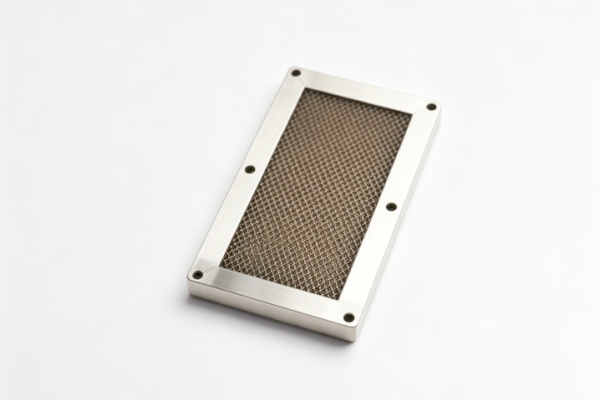
If you've ever looked inside a shielded cabinet, you've seen them. Metal honeycomb panels bolted over fan openings. Looks simple. Punch some holes in a sheet of metal, bolt it on, right?
Wrong.
That honeycomb is doing a neat physics trick. It lets air flow like an open window, but blocks RF like a solid wall. And the secret isn't the metal – it's the holes.
Here's how it works.
The Problem: Heat vs. RF
Every electronic cabinet has two problems.
First, heat. Components get hot. Fans push air through. You need openings.
Second, interference. Your own gear radiates RF. Outside signals – cell towers, radios, radar – want to get in. You need a shield.
A plain hole solves the first problem. It makes the second worse. A solid metal plate solves the second, but chokes airflow.
A honeycomb vent solves both at once.
The Trick: Waveguide Below Cutoff
A honeycomb vent is a bunch of little metal tubes. Each tube is a waveguide.
If you send a radio wave down a tube that's too small for its wavelength, the wave can't propagate. It bounces off the walls and loses energy. That's called waveguide below cutoff.
Air molecules don't care. They flow right through.
So the same openings that let air pass stop RF cold.
Two Knobs That Control Performance
Cell size. Smaller cells block higher frequencies. Standard 1/8‑inch cells have a cutoff around 1.5 GHz. 1/16‑inch cells push that to 3 GHz and beyond.
Cell depth. Deeper cells give more attenuation. The industry standard is a 4:1 depth‑to‑opening ratio – 1/2‑inch deep for 1/8‑inch cells.
Trade‑off: smaller cells and deeper depth mean less airflow. So you pick the balance that fits your frequency and your cooling needs.
Why Mesh Can't Compete
Wire mesh is cheap. But it's not a waveguide. The holes are irregular, and there's no depth. At high frequencies – 1 GHz and above – mesh leaks like a screen door.
A honeycomb vent with the same open area gives you 40‑60 dB of shielding at 2 GHz. Mesh gives you maybe 10‑15 dB. That's the difference between passing EMC and failing.
What to Look For
When you're buying a honeycomb vent, check:
Cell size. Match it to your highest frequency.
Depth. 1/2 inch for most, 1 inch for high shielding.
Open area. 80‑90% is good. Less than that, fans struggle.
Material. Aluminum for indoor. Stainless for outdoor.
Gasket. Conductive seal around the frame. No gasket, no seal.
A honeycomb ventilation panel isn't just a piece of metal with holes. It's a waveguide array that stops RF while letting air flow.
Air molecules see a bunch of open tubes. RF sees a wall.
That's the trick. Simple physics. Works every time.