To be a valuable global supplier
for metallic honeycombs and turbine parts


Contact number
0555-2813555
To be a valuable global supplier
for metallic honeycombs and turbine parts
Technological Innovation
Process Management
Continuous Improvement
Customer Satisfaction
Knowledge
Dedication
Diligence
Loyalty
Responsibility
Confidence
Tenacity
Respect

To be a valuable global supplier
for metallic honeycombs and turbine parts
Release time:2026-03-23
When you're the one making the substrates, engine builders don't cut you much slack. Here's what they actually care about—consistency, reliability, and knowing they can trust your parts not to come back.
metal honeycomb substrate manufacturer, catalytic substrate supplier, engine catalyst maker, automotive substrate quality, substrate manufacturing standards, OEM catalyst supplier, emission control manufacturing
I've been making metal honeycomb substrates long enough to know that engine manufacturers don't think about us much. When things go right, we're invisible. When things go wrong, we're the first call they make.
Over the years, I've learned what they actually care about. Not what's written in the purchase order. What keeps them up at night. And what makes them stick with one supplier instead of shopping around.
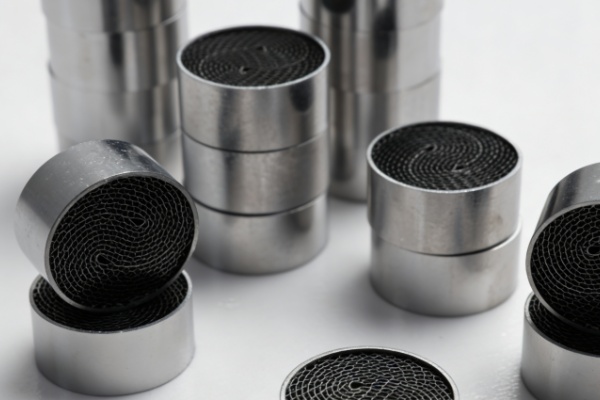
The first thing we learned when we started supplying engine builders is that they hate surprises.
Their engines are calibrated around our substrates. The oxygen sensor readings, the backpressure targets, the light-off temperature—all of it assumes our parts are the same every time. If we ship a batch that's slightly off, their calibration goes with it. And they notice.
I remember a run we did years ago. Everything looked fine on our end. Cell density checked out. Dimensions were within spec. But when the customer got them, their flow bench numbers were different. Not by much. Enough to matter.
Turns out our foil supplier had changed their rolling process without telling us. The surface finish was slightly different. It changed how the cells formed. Not enough to fail our internal checks, but enough to shift their numbers.
We learned that day that consistency isn't just about hitting the numbers on a spec sheet. It's about keeping everything the same, batch after batch. The foil. The tooling. The furnace cycle. Everything.
Now we track everything. Which coil of foil went into which batch. Which operator ran the forming press. Which furnace cycle it went through. When something shifts, we know what changed and we catch it before it ships.
Every substrate maker knows brazing matters. But engine manufacturers have a way of testing it that keeps me up at night.
They take a sample from every batch and they try to break it. Literally. They'll peel the layers apart and see if the bond holds. If the foil tears before the joint gives, it's good. If the layers come apart clean, it's bad.
I've stood in their lab and watched them do it. They don't say much. They just look at the sample, look at the paperwork, and make a decision. That decision determines whether we ship a whole pallet or we take it back.
We started doing that test ourselves years ago. Every batch, we sacrifice one part and peel it. If the brazing isn't solid, we don't ship. It costs us a part now and then, but it's cheaper than taking back a whole order.
You'd think getting the dimensions right would be the easy part. But I've learned that "right" means something different to an engine manufacturer than it does to us.
We measure our substrates with calipers and gauges. They measure them with fixtures that simulate their assembly line. If the substrate is a millimeter too big, it doesn't fit in their can. If it's a millimeter too small, it rattles. Neither one works.
We had a customer once who rejected a whole shipment because the substrates were 0.3 mm oversize. 0.3 mm. We thought they were being unreasonable. Then they showed us their assembly line. The cans were welded to tight tolerances. 0.3 mm meant the difference between sliding in and forcing in. Forcing in meant stress on the can, stress on the welds, potential failures down the line.
Now we hold tighter tolerances than the spec calls for. Not because we have to. Because we know what happens if we don't.
Here's something we didn't think about early on. Engines go different places.
A catalytic converter for a car in the Midwest is one thing. A diesel engine on a fishing boat is something else entirely. Salt spray changes everything.
We used to ship the same aluminum substrates to everyone. Then we started getting calls from coastal customers. Substrates corroding after a couple of years. Aluminum turning to powder. We learned the hard way that we have to ask where the engine is going.
Now we keep both aluminum and stainless steel on hand. For automotive, aluminum does the job. For marine, coastal, or any application where salt is in the air, it's stainless. Costs more. But it lasts. And that's what matters to the customer who's replacing a failed part.
What Our Customers Actually Say
Over the years, I've heard the same things from engine manufacturers over and over. Here's what they tell us when they're being honest.
"Don't change anything without telling us." They've learned that small changes in our process can cause big changes in their calibration. They'd rather know about a change ahead of time than find out when their test data goes sideways.
"Label your batches clearly." When something does go wrong, they need to know which parts are affected. A batch number, a date code, something they can use to pull the right parts out of inventory. I've seen customers reject whole shipments just because the labeling wasn't clear enough.
"Tell us if our application is wrong for your part." This one took us a while to learn. We used to say yes to every order. Now we ask questions. What engine is this going on? Where will it be used? What temperatures will it see? If the part isn't right for the job, we say so. It costs us a sale sometimes, but it saves us a warranty claim later.
We didn't always test the way we do now. We used to check dimensions, count cells, call it good. Then we started getting calls.
Now we have a routine.
Incoming foil gets tested. Thickness, surface condition, test bonds to make sure it brazes properly.
During forming, we pull samples every hour. Check cell dimensions. Check for crushed or misaligned cells.
After stacking, we check layer count and alignment before anything goes in the furnace.
After brazing, we peel a sample from every batch. If the bond doesn't hold, the whole batch gets reworked or scrapped.
Final inspection measures dimensions, cell density, and backpressure. We flow air through every substrate before it ships. Not a sample. Every one.
It sounds like a lot. It is. But we learned that catching a problem in our shop is a lot cheaper than catching it in the customer's lab.
I still remember the worst one.
We shipped a batch of substrates to a diesel engine manufacturer. Everything passed our checks. Good foil. Good brazing. Dimensions on spec. They built them into engines. Those engines went into trucks. Two years later, we started getting calls.
The substrates were failing. Not all of them. Just some. Cracking around the edges. We couldn't figure it out. The brazing was solid. The dimensions were right. We pulled our records and everything looked fine.
Turns out the issue was thermal cycling. The engine had a regeneration cycle that got hotter than we realized. Our substrates were rated for a certain temperature. This engine exceeded it. Not by much. Just enough to cause fatigue over time.
We learned to ask more questions after that. Not just what engine. What duty cycle. What regeneration strategy. How hot does it actually get. We added that to our pre-sale checklist. We haven't had that problem since.
Being a metal honeycomb substrate maker isn't glamorous. Most people don't know what we do. But engine manufacturers know. And what they care about isn't complicated.
They want consistency. They want parts that fit. They want brazing that holds. They want materials that match the application. And they want a supplier who tells them the truth.
We don't get it right every time. Nobody does. But we've learned that being honest about our process, testing the things that matter, and asking the right questions upfront makes the difference between being a supplier they tolerate and a supplier they trust.
Because at the end of the day, when their engine goes into a truck or a boat or a generator, our substrate is in there. If it works, nobody thinks about us. If it doesn't, they remember. And we'd rather be forgotten.