To be a valuable global supplier
for metallic honeycombs and turbine parts


Contact number
0555-2813555
To be a valuable global supplier
for metallic honeycombs and turbine parts
Technological Innovation
Process Management
Continuous Improvement
Customer Satisfaction
Knowledge
Dedication
Diligence
Loyalty
Responsibility
Confidence
Tenacity
Respect
To be a valuable global supplier
for metallic honeycombs and turbine parts
Release time:2025-11-27
Working on industrial engines is never simple. Generators, forklifts, construction machines—they all run under heavy stress. Long hours, high loads, sudden temperature spikes, and constant vibration put a lot of strain on the catalytic system. Choosing the right metal substrate isn’t just ticking a box—it determines if your system lasts or fails early.
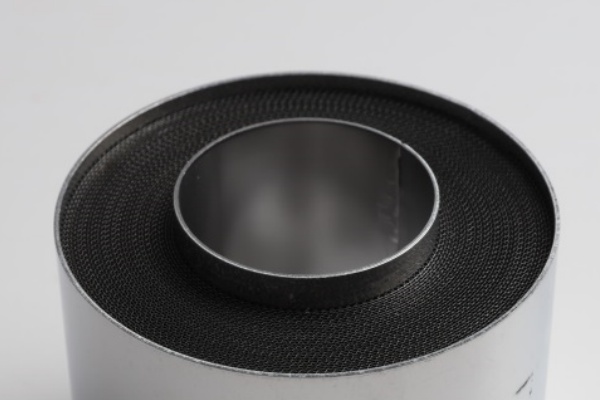
The first thing I look at is the operating temperature. Most industrial engines run around 350–550°C, sometimes peaking near 700–900°C. They also shift frequently between idle and full load. In these conditions, Fe-Cr-Al substrates with thicker foil—around 70–100 μm—hold up best. The aluminum oxide layer that forms during operation helps protect the substrate and keeps the catalyst coating from flaking off.
Foil thickness is another big factor. Thin foils heat up fast, which helps start the reaction quickly, but they don’t survive vibration well. Medium foils offer a balance, while thick foils can take pounding but take longer to reach operating temperature. On heavy-duty or off-road engines, thicker foils are usually the safer choice. A thin foil might warp or collapse after just a few hundred hours.
Cell density—or CPSI—also matters. It affects both flow resistance and the surface area for the chemical reactions. Too low, and you lose conversion efficiency; too high, and backpressure becomes a problem. For industrial engines, 200–400 CPSI tends to work best. It gives enough catalyst surface without choking the engine.
Vibration and mechanical stress can’t be ignored. Industrial engines shake constantly, especially construction equipment and off-road machinery. A good metal substrate has strong interlocked honeycomb structures, brazed joints that don’t crack, reinforced end rings, and materials resistant to high temperatures. Skip any of these, and you’ll see crushed channels, cracked joints, or warped honeycombs within weeks.
Coating adhesion is just as important. Fe-Cr-Al forms a stable oxide layer that helps the washcoat stick, but the coating itself needs to match the engine’s duty. High sulfur fuel, slow warm-up cycles, long-term aging, and oxygen-rich exhaust all influence the coating formulation. Engines that idle a lot need a catalyst that works efficiently at lower temperatures.
Size matters, too. Substrate dimensions should match engine displacement and exhaust flow. Small engines can use compact units, medium engines need medium-diameter substrates, and large engines may require bigger honeycombs or even multi-brick modules. The goal is to get enough surface area for efficient conversion without creating excessive backpressure.
Finally, don’t forget regulations. Industrial engines often have to meet EPA Tier 3/4, EU Stage III/V, China Stage III–V, or local industrial emission mandates. Depending on requirements, a simple DOC might be enough, or a combined DOC + DPF + SCR system could be required.
In short, choosing the right metal substrate is about more than material specs. It’s about surviving heat, vibration, long hours, and still keeping backpressure low while meeting emission standards. The right substrate keeps the catalytic system running efficiently for years. The wrong choice? Even the best coating won’t save it.